- All
- Product Name
- Product Keyword
- Product Model
- Product Summary
- Product Description
- Multi Field Search
Views: 0 Author: Site Editor Publish Time: 2026-08-13 Origin: Site


In industrial fabrication and structural engineering, specifying the correct material profile dictates project success. The wrong choice compromises load-bearing capacity, introduces fabrication bottlenecks, and inflates project timelines. Procurement teams and engineers must balance directional rigidity and corrosion resistance when designing structural supports, bracing, and framework. Over-engineering wastes resources, while under-engineering risks catastrophic failure in harsh environments. You need a material that performs predictably under specific load conditions. The rectangular profile of the Flat Bar serves as the default specification for directional load applications. It offers distinct performance metrics, fabrication realities, and comparative advantages over alternative bar shapes, specifically in stainless steel grades.
Directional Rigidity: The rectangular profile and wide face of a flat bar provide superior structural support and bracing in single-axis load applications compared to round or square alternatives.
Manufacturing Variations Impact Performance: The choice between "True Bar" (hot rolled or cold drawn) and sheared/edge-conditioned flat bar dictates dimensional tolerances, edge integrity, and suitability for high-stress applications.
Lifecycle Cost Efficiency: While initial material costs are higher than carbon steel, stainless flat bar eliminates the need for secondary protective coatings and drastically reduces maintenance downtime in corrosive industrial environments.
Grade-Specific Scalability: Selecting between 304/304L and 316/316L allows engineers to scale corrosion resistance precisely to the application's environmental demands (e.g., chemical processing vs. general fabrication).
Selecting a structural profile requires analyzing how it handles physical stress. The rectangular cross-section distributes weight efficiently. It resists bending moments when oriented correctly against the primary load. You place the wider face parallel to the load path for maximum surface contact. You orient the narrower edge against the load to maximize bending resistance. This directional strength makes it highly efficient for bracing. The moment of inertia dictates this behavior. A rectangular section provides a higher section modulus along its major axis compared to a square bar of the same cross-sectional area. This means you get more bending resistance for the same amount of material weight.
Material synergy plays a massive role in this performance. The inherent properties of stainless steel compound the structural benefits of the flat profile. High tensile strength prevents deformation under heavy loads. Excellent ductility allows for minor flexing without sudden brittle failure. The chromium oxide passivation layer provides self-healing corrosion resistance. When you scratch or cut the material, the exposed chromium reacts with oxygen to instantly reform the protective layer. This combination ensures the structural profile maintains its integrity over decades of service in harsh environments.
Fabrication versatility separates this profile from complex structural shapes. I-beams and channels require specialized coping and complex joint preparation. A Stainless Flat Bar simplifies modular and custom assemblies. You can weld it easily using standard TIG or MIG processes. Drilling through the flat surface requires standard tooling setups without the need for angled fixtures. Bending the material along its weaker axis is straightforward for custom bracket fabrication. Fastening multiple bars together creates rigid, reliable connections with maximum surface area contact between the bolted faces.
Profile Type | Primary Load Axis | Bending Resistance (Major Axis) | Fabrication Complexity | Surface Area for Connections |
|---|---|---|---|---|
Rectangular Flat | Unidirectional | High | Low | Maximum |
Round Solid | Omnidirectional | Moderate | Moderate (requires coping) | Minimal (tangent point only) |
Square Solid | Bidirectional | High | Low | High |
Different industries leverage this material profile to solve specific environmental and mechanical challenges. The application dictates the required grade and finishing standards. Engineers rely on the predictable mechanical properties of these profiles to design safe, durable structures.
In the petrochemical sector, equipment faces constant exposure to volatile compounds and extreme pressures. Fabricators use these profiles as external stiffeners, bar rings, and structural reinforcements for pressure vessels and storage tanks. The outcome prevents tank wall deflection under hydrostatic pressure. It resists corrosive chemical spills and atmospheric degradation. When a massive storage tank is filled with heavy liquids, the outward pressure on the lower shell courses is immense. Welding rolled rectangular profiles around the circumference provides the necessary hoop strength to prevent the tank from bulging or rupturing.
Saltwater environments destroy standard carbon steel rapidly. Marine engineers specify these profiles for structural framework, brackets, grab bars, and deck hardware. The material delivers high strength-to-weight ratios. It withstands prolonged exposure to chloride-rich environments, specifically when utilizing 316L. On offshore oil rigs, every pound matters. Using a rectangular profile allows engineers to orient the strongest axis against the anticipated wave or wind loads, saving weight compared to using solid square stock.
Sanitation is the primary concern in food and pharmaceutical facilities. Fabricators build conveyor framework, structural supports, and cleanroom bracing using these profiles. The outcome facilitates rigorous washdown protocols. The flat, smooth surface minimizes bacterial harborage points compared to porous or coated materials. Unlike I-beams or channels that have inside corners where debris can accumulate, a rectangular profile is easy to clean and inspect. Facilities often specify a polished finish to further reduce the surface roughness and prevent microbial growth.
Pulp and paper mills operate in hot, humid, and chemically aggressive environments. Maintenance teams use these profiles for machine frames, agitator supports, and process line guide rails. The material resists aggressive chemical bleaches, organic acids, and high humidity levels typical of processing plants. In a paper machine, the structural supports are constantly sprayed with water and chemicals. Standard steel would rust away in months, causing misalignment of the high-speed rollers.
High-performance vehicles and defense systems require materials that will not fail under stress. Engineers design high-strength brackets, mounting plates, suspension reinforcements, and structural chassis components using these profiles. The outcome meets stringent defense-grade strength specifications. It optimizes weight savings and structural durability under cyclic loading. In military ground vehicles, these profiles reinforce the chassis against blast impacts and rough terrain without adding excessive weight that would reduce mobility.
Modern architecture often exposes structural elements for aesthetic purposes. Builders use these profiles for base plates, structural ties, exposed architectural bracing, and ornamental metalwork. The outcome combines high load-bearing capacity with aesthetic longevity. It eliminates the need for ongoing rust remediation. In coastal high-rise construction, using these profiles for balcony supports ensures the structure remains safe and visually appealing for decades without requiring expensive scaffolding and repainting operations.
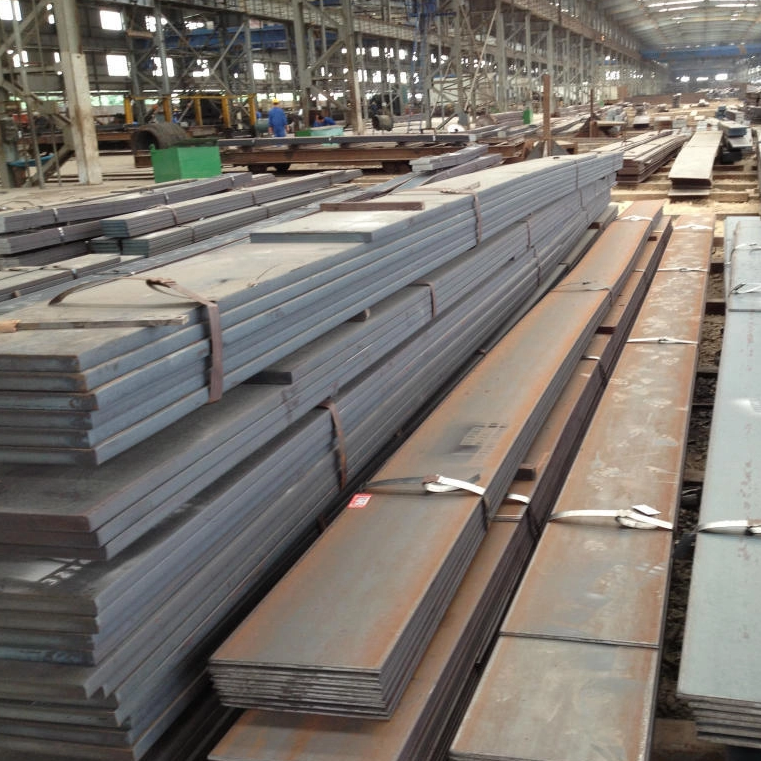
Understanding production methods is critical for specifying the right material. The manufacturing process directly affects dimensional tolerances, edge conditions, and structural integrity. You cannot simply order a profile without specifying how it was made, as the mechanical properties and physical dimensions will vary significantly between methods.
Mills form True Bar to exact dimensions during the rolling process. They pass the heated billet through a series of grooved rollers that gradually shape the material into its final rectangular form. This method produces tighter dimensional tolerances and a uniform grain structure. You get an identical finish on all four sides. The structural integrity remains consistent throughout the entire length. True Bar is best for high-stress structural applications. It excels in precision machining and defense components. You should specify it for exposed architectural uses where edge aesthetics and uniformity matter. When you put a True Bar in a CNC mill, you know exactly where the edges are, reducing setup time and scrap rates.
Manufacturers cut this variation from larger stainless steel plates. They use massive hydraulic shears to slice the plate into strips. They then edge-roll or condition the material through a Gauer machine to remove the sharp burrs and achieve a finished, safe edge. This process results in wider dimensional tolerances. You might encounter slight edge work-hardening from the shearing action. Camber (a slight curve along the flat edge) or twist from the shearing process are possible. However, it offers high sizing flexibility. It allows for fast customization of fractional or non-standard widths directly from plate stock. You avoid waiting for custom mill-runs. It is best for general fabrication and hidden structural supports. Use it for tank stiffeners and projects where exact mill tolerances are not strictly required.
You must establish a framework for deciding when the premium for True Bar is justified. Safety requirements often dictate the choice. If the component is a critical load-bearing member in a lifting device, the uniform grain structure of a True Bar is mandatory. Machining requirements also play a role. If you need to drill and tap precise holes along the edge of the profile, the dimensional consistency of a True Bar will save hours of machining time and prevent broken taps.
Feature | True Bar | Sheared and Edged Bar |
|---|---|---|
Production Method | Hot rolled or cold drawn at the mill | Sheared from plate, edges conditioned |
Dimensional Tolerance | Very tight and consistent | Wider, subject to slight variation |
Edge Condition | Uniform, identical to face finish | Conditioned, potential for slight work-hardening |
Customization Speed | Slower (requires mill run for custom sizes) | Faster (cut directly from existing plate stock) |
Primary Use Case | Precision machining, exposed architecture | Hidden supports, tank stiffeners, general fabrication |
Selecting the correct alloy grade prevents premature failure. You must match the material chemistry to the operating environment. The difference between success and catastrophic failure often comes down to a few percentage points of specific alloying elements.
This is the industry baseline. It offers excellent oxidation resistance and formability. The alloy contains approximately 18% chromium and 8% nickel. The "L" designates a lower carbon content (maximum 0.03%), which improves weldability by minimizing carbide precipitation in the heat-affected zone. It is ideal for general industrial environments. You will find it in indoor structural supports and non-chloride environments. It performs exceptionally well where exposure to harsh salts or acids is minimal. Fabricators use it extensively for food processing equipment where standard washdown procedures do not involve heavy chlorides.
This represents the high-performance upgrade. It contains 16% chromium, 10% nickel, and crucially, 2% to 3% molybdenum. This molybdenum addition provides enhanced pitting and crevice corrosion resistance. This addition changes the material's behavior in aggressive environments. It is mandatory for marine applications and chemical processing. You must specify it for heavy industrial applications with high chloride exposure. The initial material cost is higher, but it prevents rapid degradation. If you install a 304 profile in a coastal environment, it will show tea-staining and surface rust within months. A 316 profile will remain clean and structurally sound for years.
You must verify ASTM A276 or ASTM A479 standards. These certifications ensure mechanical properties and chemical composition meet project specifications. Material Test Reports (MTRs) provide traceability. They confirm the exact heat lot, chemical breakdown, yield strength, and tensile strength. Never accept material for critical infrastructure without proper documentation. If a structural failure occurs, the MTR is your proof that the specified material was actually installed.
Engineers must justify their profile selection based on load dynamics. Different shapes distribute stress differently. You cannot swap profiles without recalculating the structural integrity of the entire assembly.
Round bars excel in applications requiring omnidirectional strength. They are perfect for shafts, axles, and dowels. They handle rotational stress well. Flat bars are superior when rigidity is required primarily in one direction. They provide a wider surface area for welding or bolting. Use them for reinforcement, bracing, and base plates where the load path is predictable. Trying to weld a round bar to a flat plate provides only a tiny tangent point of contact, requiring massive weld beads to achieve strength. A rectangular profile sits flat, allowing for simple, strong fillet welds.
Square bars offer equal strength on two axes. This makes them ideal for freestanding, symmetrical supports. They resist bending equally from multiple directions. Flat bars offer a lower profile and lighter weight. They are more efficient when the load is predictable and unidirectional. You save weight and material costs by using a flat profile for single-axis bracing. If you only need to resist a load pushing down from the top, the extra material on the sides of a square bar is dead weight.
Working with stainless steel requires specific fabrication techniques. Ignoring these realities leads to ruined material and structural defects. The material behaves very differently than standard carbon steel during cutting, welding, and machining.
Stainless steel has a high coefficient of thermal expansion. It expands significantly more than carbon steel when heated. It also has low thermal conductivity. Heat stays concentrated at the weld zone instead of dissipating through the part. Welding flat bars—especially thinner profiles—risks significant warping if heat input is not strictly controlled. The material will pull and twist as it cools, ruining the dimensional accuracy of the assembly.
Employ staggered welding techniques to distribute heat evenly across the assembly.
Utilize heavy clamping fixtures and strongbacks to hold the material rigid during the welding and cooling process.
Specify low-carbon (L-grades) to prevent carbide precipitation at the grain boundaries, which causes intergranular corrosion.
Use the correct filler metal, such as ER308L for 304 base metal or ER316L for 316 base metal, to ensure the weld matches the corrosion resistance of the parent material.
Drilling or milling this material can cause it to work-harden rapidly. As the tool rubs against the surface, the metal becomes exceptionally hard. This destroys tooling and halts production. If you let a drill bit spin without cutting, the surface will harden to the point where you cannot penetrate it without specialized carbide drills.
Utilize highly rigid machining setups to prevent chatter and vibration.
Use sharp carbide tooling exclusively, ensuring proper relief angles.
Maintain consistent, heavy feed rates to cut below the work-hardened layer created by the previous pass.
Never let the tool dwell or rub on the surface; always keep the tool moving and cutting.
Use high-quality, sulfurized cutting fluids to reduce friction and evacuate heat from the cutting zone.
When bolting flat bars together, friction generates heat. The protective oxide layer can strip away. This causes the threads to cold-weld together, a process known as galling. The fastener seizes completely. You cannot tighten or loosen it; you must cut it off.
Use high-quality anti-seize compounds containing nickel or molybdenum disulfide on all threaded connections.
Use dissimilar alloy grades for nuts and bolts (e.g., a 316 nut on a 304 bolt) to prevent the metals from fusing under pressure.
Tighten fasteners slowly to minimize heat generation from friction.
Stainless steel flat bar remains the optimal choice for industrial applications requiring unidirectional structural rigidity. It combines this strength with long-term environmental resilience. The rectangular profile offers superior bracing capabilities compared to round or square alternatives. It streamlines fabrication and reduces overall assembly weight.
The decision ultimately hinges on matching the correct production method and alloy grade to your specific needs. You must weigh True Bar against Sheared options based on tolerance requirements. You must select between 304 and 316 based on the corrosive threats of the operating environment. Proper specification prevents both over-engineering and premature failure.
Take the following actions to optimize your material selection:
Audit your current structural material lifecycles to identify premature corrosion failures.
Consult with a metallurgist or supplier regarding specific load calculations for your bracing requirements.
Determine if your application requires the tight tolerances of True Bar or if Sheared edge is sufficient.
Request Material Test Reports (MTRs) for any flat bar specified for critical infrastructure.
Update your fabrication guidelines to address thermal distortion and work-hardening risks.
A: True bar is hot-rolled or cold-drawn at the mill, offering tight dimensional tolerances and uniform edges. Sheared flat bar is cut from steel plate and edge-conditioned, resulting in wider tolerances but faster custom sizing.
A: Standard thicknesses typically range from 1/8 inch to 2 inches. Widths generally run from 1/2 inch up to 12 inches. Custom sizes can be sheared from plate stock to meet specific project requirements.
A: Yes, it possesses excellent ductility. It can be bent or formed using press brakes. However, you must account for springback, and bending along the wider axis requires significantly more force.
A: Grade 316 contains molybdenum, which provides superior resistance to pitting and crevice corrosion. It is necessary for environments exposed to chlorides, marine conditions, or harsh industrial chemicals.
A: The rectangular shape provides high structural rigidity along its wider axis. When oriented correctly against a single-axis load, it resists bending moments more efficiently than round profiles of similar weight.
A: ASTM A276 is the standard specification for stainless steel bars and shapes. ASTM A479 covers stainless steel bars and shapes for use in boilers and other pressure vessels.