- All
- Product Name
- Product Keyword
- Product Model
- Product Summary
- Product Description
- Multi Field Search
Views: 0 Author: Site Editor Publish Time: 2026-08-09 Origin: Site


Specifying the correct metal stock is a foundational step in any construction project. Incorrect material selection leads to structural vulnerabilities, compliance failures, and severe project delays. When engineers and fabricators specify a Flat Bar, they are not looking for consumer hand tools like pry bars or utility bars. They require structural steel stock designed for load-bearing applications, framework fabrication, and heavy industrial reinforcement.
The core challenge lies in balancing load-bearing requirements with environmental exposure risks and fabrication constraints. Moisture, chemical exposure, and mechanical stress dictate the exact grade and dimensions required for a safe build. Choosing the wrong alloy or under-sizing the profile compromises the entire assembly. This guide provides a technical evaluation framework for engineers, procurement managers, and fabricators to systematically select the correct structural stock based on material grade, dimensional tolerances, and project-specific risk factors.
Material dictates longevity: The choice between a carbon steel flat bar, stainless steel, or aluminum must align strictly with the project's environmental exposure and tensile strength requirements.
Dimensions drive structural integrity: Width and thickness ratios directly impact deflection resistance and load-bearing capacity; thicker/wider bars are mandatory for heavy frameworks, while thinner profiles suit light reinforcement.
Nomenclature standards simplify procurement: Ordering flat bar stock requires using the industry-standard Width (W) x Thickness (T) x Length (L) format to prevent supply chain errors.
Processing impacts performance: The decision between hot-rolled and cold-drawn manufacturing alters surface finish, dimensional accuracy, and overall yield strength.
Compliance is non-negotiable: Sourcing must always include verification through Material Test Reports (MTRs) to ensure adherence to ASTM or equivalent industry standards.
Establishing baseline success criteria begins with calculating the required tensile and yield strength for the specific application. Tensile strength determines the maximum stress the metal can withstand before failing. Yield strength indicates the point at which permanent deformation occurs. Structural engineers evaluate the anticipated static and dynamic loads the framework will endure. This involves analyzing bending moments, shear forces, and axial loads applied to the structural members.
Adding thicker or wider stock increases structural support but adds significant dead weight to the framework. This trade-off requires careful calculation. Excessive dead weight increases the load on foundational elements and connecting joints. You might need heavier fasteners or reinforced base plates to compensate. Efficient design dictates selecting a profile that meets safety factor requirements without inflating the overall mass of the structure. Engineers utilize structural analysis software to model these forces and optimize the cross-sectional area.
Identify the maximum static load the member must support.
Calculate anticipated dynamic loads, including wind or seismic activity.
Determine the acceptable deflection limit for the specific span.
Select a cross-sectional area that provides the necessary section modulus.
Verify that the added dead weight does not exceed foundation limits.
Evaluating the installation environment is mandatory for ensuring long-term structural integrity. Moisture classifications directly dictate the required corrosion resistance. A dry interior environment presents minimal corrosion risk, allowing for standard untreated alloys. High atmospheric humidity, such as in poorly ventilated industrial facilities or tropical climates, accelerates oxidation. Coastal salinity introduces chlorides that rapidly degrade standard steel, requiring specialized alloys or heavy protective coatings.
Direct chemical or liquid immersion represents the highest risk category. In wastewater treatment plants or chemical processing facilities, the metal must resist aggressive corrosive agents. Establishing baseline requirements for corrosion resistance based on these moisture zones prevents premature structural failure. Long-term maintenance expectations must factor into this evaluation. Specifying a highly resistant material upfront eliminates the need for repeated painting or coating applications over the lifespan of the structure.
Environmental Exposure Risk Matrix | |||
Exposure Level | Environment Type | Corrosion Risk | Recommended Material Approach |
|---|---|---|---|
Level 1 | Dry Interior, Climate Controlled | Low | Standard Carbon Steel (Untreated) |
Level 2 | Exterior, Low Humidity | Moderate | Carbon Steel with Primer/Paint |
Level 3 | High Humidity, Industrial | High | Galvanized Steel or Aluminum |
Level 4 | Coastal, Chemical Immersion | Extreme | Stainless Steel (316) |
The way the material will be utilized on-site or in the fabrication shop heavily influences selection. Criteria must be defined based on the required processes: welding, bending, drilling, or fastening. Some alloys offer excellent weldability but poor machinability. Others are easily machined but prone to cracking during tight-radius bending. Understanding shop capabilities and field installation methods ensures the selected material can be processed efficiently without compromising structural properties.
Material hardness directly impacts tooling wear and labor time. Harder alloys require specialized cutting tools, slower feed rates, and increased machining time. This extends fabrication schedules. Softer materials machine quickly but may not meet the necessary yield strength requirements. Fabricators balance the mechanical properties required for the final application with the practical realities of cutting, drilling, and welding the stock within the project timeline.
For high-stress, heavy structural frameworks, bracing, and base plates, the Carbon Steel Flat Bar remains the primary choice. Its exceptional cost-to-strength ratio makes it the industry default for dry or encased construction environments. Carbon steel provides the necessary rigidity and yield strength to support massive loads without excessive deflection. It is highly weldable and easily integrated into larger steel assemblies using standard fabrication techniques.
Common grades, such as ASTM A36, offer a minimum yield strength of 36,000 psi. This makes them suitable for a vast array of structural applications. A36 is readily available, easily machined, and responds well to standard welding processes. For applications requiring higher strength, grades like A529 or A572 provide increased yield strengths. This allows for lighter cross-sections while maintaining load-bearing capacity. The primary limitation of carbon steel is its susceptibility to oxidation, requiring secondary coatings if exposed to moisture.
When applications demand inherent rust resistance without reliance on secondary coatings, stainless steel is the required specification. Grades like 304 and 316 are engineered for wet environments, food processing facilities, and coastal structures. The addition of chromium creates a passive oxide layer on the surface. This prevents further corrosion even when the material is scratched or machined. Grade 316 includes molybdenum, offering superior resistance to chlorides and industrial solvents.
Stainless steel carries a higher upfront material cost compared to carbon steel. However, the long-term return on investment is substantial in corrosive environments. It eliminates labor and material costs associated with periodic repainting, galvanizing, or replacing rusted structural members. Life-cycle durability is significantly extended. This makes stainless steel the most economical choice over a multi-decade operational period in high-moisture zones.
Aluminum is positioned for architectural trims, lightweight frames, and environments requiring natural oxidation resistance combined with low mass. It is approximately one-third the weight of steel. This makes it ideal for applications where reducing the dead load is a primary objective. Aluminum naturally forms a protective oxide layer. It provides excellent corrosion resistance in standard atmospheric conditions without additional treatments.
Aluminum possesses a lower tensile strength compared to carbon steel. This establishes clear boundaries for its structural use. It is rarely used for primary load-bearing columns or heavy industrial frameworks. It excels in secondary support structures, curtain walls, and custom fabrications where malleability and ease of extrusion are prioritized. Engineers must carefully calculate deflection limits when substituting aluminum for steel in any load-bearing capacity.
Material Comparison Matrix | |||
Material | Primary Application | Corrosion Resistance | Yield Strength (Typical) |
|---|---|---|---|
Carbon Steel (A36) | Heavy structural frameworks, dry environments | Low (requires coating) | 36,000 psi |
Stainless Steel (304/316) | High moisture, chemical exposure, coastal | High | 30,000 - 40,000 psi |
Aluminum (6061) | Lightweight frames, architectural trim | Medium to High | 35,000 - 40,000 psi |
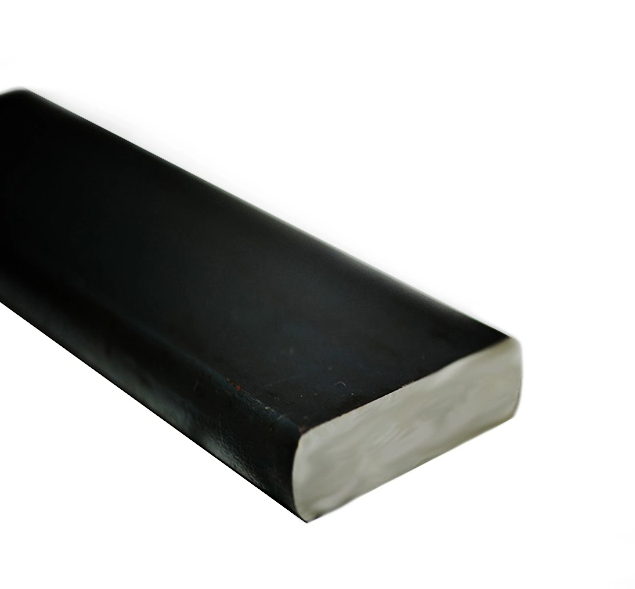
The cross-sectional area of the stock strictly determines its load-bearing capacity and resistance to deflection. When a load is applied, the material's moment of inertia dictates how much it will bend. Sizing application rules are straightforward. Thicker and wider bars, typically 1/2 inch in thickness and above, are mandatory for primary load-bearing structural supports. These dimensions provide the necessary rigidity to prevent structural failure under heavy static or dynamic loads.
Thinner profiles ranging from 1/8 inch to 1/4 inch in thickness are suited for brackets, bracing, clips, and light reinforcement. These applications do not carry the primary weight of the structure. They serve to stabilize joints or attach secondary components. Specifying a bar that is too thin for a primary support leads to excessive deflection, compromising the entire assembly. Engineers calculate the required section modulus to ensure the chosen width and thickness can safely handle anticipated bending moments.
Procurement errors often stem from incorrect specification formats. The standard format for specifying and ordering stock is strictly Width (W) x Thickness (T) x Length (L). For example, a callout of 2" x 1/4" x 20' clearly defines a bar that is two inches wide, one-quarter inch thick, and twenty feet long. Adhering to this nomenclature prevents costly mistakes at the service center or mill.
Listing the width first is the universal industry standard. This sequence ensures that the material is processed, cut, and oriented correctly during fabrication. Reversing the width and thickness in a purchase order can lead to receiving material that is entirely unsuitable for the intended application. This causes immediate project delays. Clear, standardized communication with suppliers is essential for maintaining construction schedules.
The unsupported length of a structural member significantly impacts its susceptibility to bending and torsion under load. As the span increases, the potential for deflection increases exponentially. Engineers evaluate the distance between support points and select a cross-section that maintains rigidity over that specific length. Long spans may require transitioning to a thicker profile or incorporating additional mid-span supports to prevent buckling.
Logistical constraints regarding shipping lengths and on-site splicing must be addressed. Standard mill lengths are typically 10, 12, 20, or 24 feet. Transporting lengths exceeding 40 feet requires specialized freight logistics and permits. If a project requires continuous spans longer than standard shipping lengths, fabricators plan for on-site splicing. They use full-penetration welds or heavy-duty bolted connections, which adds to installation time and labor costs.
Nominal sizes often differ slightly from actual mill tolerances. When a mill produces metal stock, slight variations in width and thickness occur due to the cooling process and equipment calibration. These acceptable variations are defined by ASTM standards. For general construction, these minor discrepancies are rarely an issue. Precision applications demand tighter control over true dimensions.
Specifying exact dimensional tolerances is critical when the material must fit precisely into machined assemblies, tight structural channels, or automated manufacturing equipment. If a bar is slightly oversized due to loose mill tolerances, it may require extensive secondary machining to fit into a designated slot. Engineers explicitly state the required tolerances on engineering drawings and verify that the supplier can meet those strict dimensional requirements before placing an order.
The manufacturing process fundamentally alters the physical characteristics of the metal. Hot-rolled stock is processed at high temperatures. This results in a rougher surface scale, looser dimensional tolerances, and rounded edges. It serves as the standard for general construction, welding, and structural frameworks where precise aesthetics and exact dimensions are not the primary concern. The cooling process introduces slight warping, which is acceptable in heavy structural applications.
Cold-drawn stock is processed at room temperature. The metal is pulled through dies to achieve precise dimensions, sharp corners, and a smooth surface finish. This cold-working process increases the yield strength and hardness of the material. Cold-drawn bars are ideal for machined parts, tight-tolerance assemblies, and exposed architectural elements. Fabricators evaluate whether the structural benefits and reduced machining time justify the premium price of cold-drawn stock.
Applying secondary finishes to carbon steel is necessary to mitigate moisture damage and prevent rapid oxidation. Hot-dip galvanizing immerses the steel in molten zinc. This creates a thick, durable metallurgical bond that provides excellent long-term corrosion resistance, even in harsh outdoor environments. Other options include powder coating or industrial priming, which offer varying degrees of protection and aesthetic customization.
Procurement managers analyze the trade-off between purchasing pre-galvanized stock versus the labor cost of post-fabrication coating. Pre-galvanized material is ready for immediate installation but requires specialized techniques if welding is necessary. The zinc coating must be ground away and repaired. Post-fabrication coating allows for seamless welding and cutting but adds a secondary processing step that extends the overall project timeline. The decision depends on the complexity of the fabrication and the specific environmental demands of the installation site.
The risk of counterfeit or substandard metal stock entering the supply chain is a serious concern that can cause catastrophic structural failure. Utilizing unverified materials invalidates engineering calculations and violates building codes. Sourcing must always include mandatory verification through Material Test Reports (MTRs). These documents provide the exact chemical composition and physical properties of the specific heat lot produced by the mill.
Validating MTRs involves a strict checklist. Engineers and quality control inspectors cross-reference the chemical breakdown (carbon, manganese, sulfur content) and the mechanical properties (tensile strength, yield strength, elongation) against the specified ASTM standard. If the MTR data does not match the engineering requirements, the material must be rejected. Consistent MTR verification is the only reliable method to ensure structural integrity and legal compliance.
Verify the heat number on the physical material matches the MTR document.
Check the chemical composition against the required ASTM standard limits.
Confirm the yield and tensile strength meet or exceed project specifications.
Ensure the document is signed by an authorized mill representative.
Supply chain risks escalate when projects require non-standard sizes, specialized alloys, or massive quantities of custom cut-to-length orders. Mills prioritize standard production runs. Requesting unique dimensions often results in extended lead times that stall construction schedules. Delays in receiving structural stock create a domino effect, pushing back fabrication, site assembly, and final project delivery.
Mitigation strategies focus on proactive design and strategic sourcing. Standardizing design dimensions to utilize readily available mill sizes drastically reduces procurement delays. When custom lengths are unavoidable, partnering with large service centers that offer in-house processing and maintain deep inventory levels is crucial. These facilities quickly saw-cut standard stock to precise lengths, bypassing long lead times associated with custom mill orders and keeping the project on schedule.
Choosing the correct structural stock requires strict alignment of material properties with anticipated structural loads and environmental realities. Define the maximum load and deflection limits to determine the necessary width and thickness. Assess the moisture and exposure environment to select the appropriate material grade. Specify standard dimensions and verify mill tolerances to ensure seamless fabrication.
Consult with a licensed structural engineer to finalize all load calculations and verify cross-sectional requirements.
Request and rigorously review Material Test Reports (MTRs) from all potential suppliers before issuing purchase orders.
Standardize your required dimensions to align with common mill sizes to reduce lead times and material costs.
Secure detailed quotes based on exact dimensional tolerances and required surface finishes to prevent downstream fabrication issues.
A: The distinction lies primarily in width and manufacturing process. Flat bars are typically narrower, usually under 8 inches wide, and are rolled to specific widths. Steel plates are much wider, often exceeding 48 inches, and are cut down from large sheets. Bars are used for localized support, while plates cover large surface areas.
A: No. A construction-grade bar is raw structural material used for fabrication, welding, and load-bearing support. A pry bar or utility bar is a finished consumer hand tool made from hardened steel designed specifically for leverage, demolition, or nail pulling.
A: Specify carbon steel for heavy structural frameworks in dry, interior environments or when the material will be encased in concrete. It offers a superior strength-to-cost ratio. Use stainless steel only when the environment involves high moisture, chemicals, or coastal salinity where rust prevention is mandatory.
A: Standard thicknesses range from 1/8 inch to over 1 inch. Standard widths typically range from 1/2 inch up to 8 inches. Common structural sizes often include 1/4", 3/8", and 1/2" thicknesses paired with 2", 3", or 4" widths, depending on the load requirements.
A: Specifying Width x Thickness x Length is the universal industry standard to prevent processing errors. It ensures suppliers and fabricators orient and cut the material correctly. Reversing width and thickness in a purchase order often results in receiving unusable material.
A: Cold-drawn (or cold-rolled) bars offer higher yield strength and tighter dimensional tolerances due to the strain hardening that occurs during room-temperature processing. However, hot-rolled bars provide sufficient structural integrity for most general construction and welding applications at a significantly lower cost.