- All
- Product Name
- Product Keyword
- Product Model
- Product Summary
- Product Description
- Multi Field Search
Views: 0 Author: Site Editor Publish Time: 2026-08-11 Origin: Site


The structural integrity, machinability, and final cost of an engineering project do not just depend on the grade of steel chosen; they are fundamentally dictated by how the flat bar is manufactured. Procurement teams and fabricators frequently face unexpected warping, edge cracking, or excessive finishing costs because they specify a generic Metal Flat Bar without understanding the metallurgical differences between true mill bar ("mill flats") and plate-derived alternatives. Mitigating these fabrication risks requires a technical understanding of the primary production pathways—hot-rolled mill production (including HRAP processes) and plate shearing/Gauering. This guide breaks down the manufacturing processes of metal flat bar to provide a clear engineering framework for specifying the correct material based on load requirements, machining tolerances, and project budgets. You will learn how to identify the right production method to prevent costly rework on the shop floor.
Production Origin Dictates Performance: True mill flat bar (mill flats) is produced directly from billets, offering a uniform grain structure ideal for heavy machining, whereas sheared flat bar is cut from plate, which can introduce severe residual stresses.
The HRAP Standard: For stainless steel flat bar, the Hot Rolled, Annealed, and Pickled (HRAP) process is the gold standard for delivering a clean, corrosion-resistant, and uniform surface finish.
High-Pressure Gauering Corrects Deformations: Plate-derived flat bars require secondary processing like Gauering (high-pressure cold roll conditioning) to flatten the bar, correct camber, remove shear burrs, and create safe, square edges.
Profile Selection Influences Welds & Polishing: The flat bar profile is uniquely engineered for specific load directions and offers faster, more cost-effective welding and polishing compared to square or round bar shapes.
Verification is Critical: Always require Mill Test Reports (MTRs) to verify whether the supplied material is a true bar or a processed plate, as this impacts structural calculations and CNC machining behaviors.
Inconsistent raw material chemistry leads to slag inclusions and localized hard spots. These defects cause premature tool wear and structural failures during fabrication. The manufacturing journey begins with strict metallurgical controls during the melting phase. If the chemistry is off by even a fraction of a percent, the mechanical properties of the final product will suffer. We see this often when fabricators try to weld material that has high sulfur content, leading to hot cracking.
High-quality raw materials are sourced through two primary methods. Virgin iron ore is processed in a Basic Oxygen Furnace (BOF). Recycled scrap steel is melted in an Electric Arc Furnace (EAF). Both methods require precise control of carbon, manganese, silicon, and chromium to meet specific ASTM standards like ASTM A36 or A276. This chemical balance ensures the final product exhibits the required tensile strength and corrosion resistance. When you order material, the mill must hit these chemical targets precisely. A slight deviation in carbon content changes the hardness and weldability entirely.
The initial casting shape determines the manufacturing pathway. Molten steel is continuously cast into specific forms. Square billets are the starting point for true mill bar. Rectangular slabs are rolled into wide plates, which serve as the precursor for sheared and edged flat bar. Understanding this origin helps predict how the material will behave during CNC machining. Billets provide a uniform grain structure. Slabs rolled into plates have a directional grain that gets interrupted when sheared into strips.
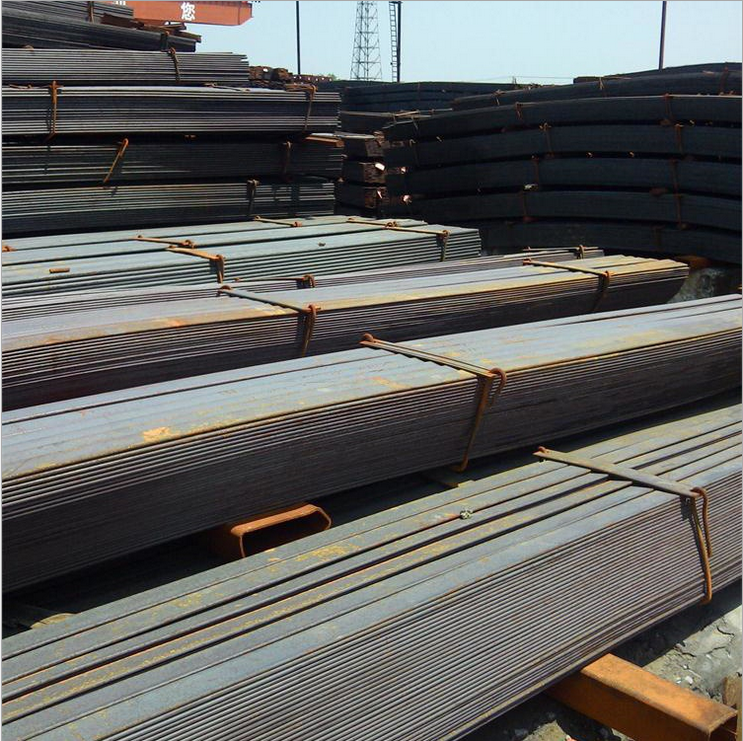
True mill bar, often referred to as mill flats, stands as the standard for dimensional and structural uniformity. It is produced directly from billets rather than cut from wider plates. This distinction matters when you put the material on a milling machine. True mill bar stays flat. Plate-derived bar often bows or twists as soon as you remove the outer skin.
The process begins by heating billets above their recrystallization temperature. This is typically over 1,700°F (925°C). The heated billet passes sequentially through grooved rollers. Horizontal and vertical edgers compress the metal into its final rectangular shape on all four sides simultaneously. This multi-axis compression creates a dense, uniform structure. The grain flow follows the length of the bar continuously. This is why true mill bar handles heavy structural loads so well.
For stainless and alloy variants, the Hot Rolled, Annealed, and Pickled (HRAP) process is the standard. After hot rolling achieves the initial profile, the material undergoes annealing. This thermal treatment relieves internal stresses. It recrystallizes the grain structure and restores ductility. Finally, pickling involves a chemical acid bath. This bath typically utilizes nitric and hydrofluoric acid. It strips away mill scale, restores chromium depletion, and delivers a uniform, corrosion-resistant finish. Without HRAP, stainless steel would rust rapidly in the field.
True mill bar features a continuous, unbroken longitudinal grain flow along the length of the bar. This grain structure provides superior dimensional stability. It prevents warping, bowing, or twisting when the material is heavily machined or slotted. If you are machining long slots or drilling multiple holes, true mill bar is the only reliable choice. It saves hours of setup and straightening time on the shop floor.
Flat bar processed from pre-rolled steel plate or coil offers flexibility in custom widths and immediate sourcing availability. However, it requires distinct processing methods that alter its mechanical properties. You can get almost any width you need quickly, but you trade off dimensional stability.
Standard steel or stainless plate is cut into strips using heavy industrial shears or rotary slitters. While efficient, shearing introduces severe localized stress. This causes dimensional deformations such as camber, twist, and bow. It also leaves a sharp, work-hardened, and deformed edge. You cannot safely handle or weld this edge without secondary processing. The shear blade literally tears the metal, leaving micro-fractures along the cut line.
To correct these defects, the sheared strips undergo Gauering. This process passes the material through heavy edge rollers under high pressure. This cold-rolling edge treatment flattens the bar. It corrects camber, removes shear burrs, and squares the edges to mimic a true mill bar profile. High-pressure Gauering significantly improves surface finish and overall flatness compared to rough, untreated sheared alternatives. It makes the material safe to handle and easier to fit up for welding.
Despite edge conditioning, plate-derived flat bar retains an internal stress profile from the initial rolling and shearing processes. Cutting, milling, or drilling a sheared and Gauered bar can release these asymmetric stresses. This release often causes the metal to warp out of tolerance during CNC fabrication. You will find yourself constantly adjusting feed rates or adding secondary straightening operations. This hidden cost often negates the initial savings of buying plate-derived bar.
Comparing the two primary manufacturing methods against critical project requirements ensures optimal material selection. Fabricators must evaluate dimensional tolerances, structural integrity, and aesthetic suitability before issuing a purchase order.
Feature | True Mill Flat Bar | Gauered (Plate-Derived) Flat Bar |
|---|---|---|
Origin | Cast Billets | Rolled Plate / Coil |
Grain Structure | Continuous, unbroken longitudinal flow | Interrupted at sheared edges |
Residual Stress | Low (Annealed) | High (Sheared and Cold Rolled) |
Machinability | Excellent dimensional stability | Prone to warping during heavy milling |
Edge Quality | Slightly rounded, hot-rolled mill edge | Square, cold-conditioned edge |
Grain structure directly impacts tensile strength, yield strength, and fatigue resistance. True mill bar, with its continuous grain flow, excels in heavy load-bearing structural applications. The unbroken grain lines act like wood fibers, providing immense strength along the axis. Gauered bar is suitable for static loads but may exhibit lower fatigue resistance at the edges due to work hardening from the shearing process.
The surface finish of HRAP true bar is generally superior for architectural applications. True mill bar requires less surface preparation and edge grinding prior to welding. Polishing a true mill bar is more consistent. Sheared edges may reveal microscopic fractures or inconsistencies that complicate high-grit finishing. If you need a mirror finish, start with true mill bar to save hours of polishing labor.
Gauered bar often presents upfront cost savings and wider availability in custom dimensions. However, these savings must be weighed against the potential hidden costs of rework. Scrap rates increase when parts warp out of tolerance. Slower machining feeds are required to manage residual stress during fabrication. Always calculate the total fabrication time, not just the raw material cost per pound.
Understanding when a rectangular Flat Bar is the superior engineering shape compared to round or square profiles is critical for optimizing structural designs. You do not want to use a square bar when a flat profile provides better directional strength at a lower weight.
Flat bar profiles are engineered for specific directional loads. They offer high bending resistance along the major axis while minimizing overall weight. This makes them ideal for support brackets, base plates, and structural bracing where force is applied predictably. You orient the wide face against the load direction to maximize the moment of inertia.
Flat surfaces are inherently easier to align, clamp, weld, and bolt compared to cylindrical profiles. This geometry simplifies joint design and reduces assembly time on the shop floor. You can easily run a fillet weld along a flat edge. Post-fabrication, flat surfaces facilitate uniform polishing and painting. This eliminates the complexities associated with coating radiused edges where paint tends to pull away.
Post-manufacturing treatments alter the mechanical properties and aesthetic value of the material. These treatments tailor the metal for specific environmental or structural demands. You specify these finishes based on where the part will live its service life.
Cold drawing involves pulling hot-rolled flat bar through a carbide die at room temperature. This process yields tighter dimensional tolerances. It increases tensile and yield strength through strain hardening. It also produces a smooth, scale-free surface finish. Cold-drawn bar is often specified for applications requiring precise fitment without subsequent machining. It costs more upfront but eliminates milling operations.
Architectural applications frequently require specific surface treatments. A #4 brushed or #8 mirror finish is common for stainless variants. For carbon steel variants exposed to corrosive environments, protective coatings are mandatory. Hot-dip galvanizing, electroplating, and powder coating provide essential barriers against oxidation. You must prep the surface properly, usually via sandblasting, to ensure these coatings adhere correctly.
Misaligned material specifications lead to project failures, excessive rework, or tool damage. Procurement teams must implement strict verification protocols to ensure the shop floor gets the right material. Do not rely solely on the vendor's verbal confirmation.
Suppliers sometimes substitute untreated slit-and-shear coil for true bar or Gauer bar without disclosure. Inspect the edges carefully upon delivery. Untreated sheared edges exhibit distinct fracture zones and roll-over marks. Rolled mill edges or properly Gauered edges are uniform and conditioned. If you see a jagged, torn edge, reject the shipment immediately.
Require Mill Test Reports (MTRs) for every delivery. MTRs trace the exact manufacturing origin. They confirm whether the material was produced from billet-to-bar or slab-to-plate. Purchase orders must explicitly state the required manufacturing method. Specify "True Bar" or "HRAP" for stainless applications alongside the relevant ASTM specifications. This legal documentation protects you if the material fails in the field.
Write purchase orders that explicitly state "True Mill Bar Only" if machining stability is required.
Train receiving inspectors to visually check edge conditions for shear marks.
File all MTRs digitally and link them to specific job numbers for traceability.
Conduct a trial machining run on a small sample before committing to a large production batch.
Audit current fabrication bottlenecks to identify if warping or excessive tool wear is linked to using plate-derived bar instead of true mill bar.
Update procurement specifications to explicitly require Mill Test Reports (MTRs) for all incoming metal shipments.
Standardize the use of HRAP processing for all stainless steel flat bar applications requiring high corrosion resistance.
Evaluate secondary finishing requirements early in the design phase to determine if cold-drawn tolerances are necessary.
A: True mill flat bar is rolled directly from a billet, providing a continuous grain structure and low residual stress. Sheared flat bar is cut from a larger plate, which interrupts the grain structure and introduces internal stresses that can cause warping during machining.
A: Hot Rolled, Annealed, and Pickled (HRAP) processing relieves internal stresses, restores ductility, and removes mill scale. The pickling acid bath restores the chromium oxide layer, ensuring maximum corrosion resistance and a clean surface finish.
A: Gauering is a cold-rolling edge treatment applied to sheared plate. It passes the metal through heavy rollers under high pressure to flatten the bar, correct camber, remove sharp shear burrs, and square the edges.
A: While possible, it is risky. Plate-derived flat bar contains residual stresses from the shearing process. When material is removed during CNC machining, these stresses are released, often causing the part to warp out of dimensional tolerance.
A: Always request a Mill Test Report (MTR) from your supplier. The MTR will indicate the manufacturing origin. Additionally, true mill bar will have slightly rounded, hot-rolled mill edges rather than the square or fractured edges typical of sheared plate.