- All
- Product Name
- Product Keyword
- Product Model
- Product Summary
- Product Description
- Multi Field Search
Views: 0 Author: Site Editor Publish Time: 2026-08-12 Origin: Site


Specifying rectangular steel components often presents a deceptive choice: procuring a manufactured flat bar versus cutting a custom width from a flat steel plate. While both materials may appear identical on a two-dimensional engineering drawing, their physical properties and manufacturing histories are vastly different. Treating these two material formats as interchangeable frequently leads to unexpected machining costs, tolerance failures, and structural inconsistencies during fabrication. The manufacturing origin of the steel directly dictates its edge condition, dimensional accuracy, and internal stress.
This guide breaks down the technical distinctions between true flat bar and flat steel plate. It provides a framework to evaluate which material format aligns with specific structural requirements, machining tolerances, and procurement budgets. By understanding the metallurgical and dimensional realities of each option, engineers and fabricators can optimize their material selection process and avoid costly rework on the shop floor.
Manufacturing Origin Dictates Tolerances: True flat bar is rolled to specific width and thickness dimensions with a finished mill edge, whereas flat steel plate is rolled to thickness and subsequently sheared, sawed, or plasma-cut to width.
Edge Condition Impacts Processing: The sheared edges of plate-cut bars (gauered bars) often require secondary machining to remove work-hardened zones or achieve squareness, adding to the total cost of processing.
Structural Integrity and Grain Flow: Structural steel flat bar offers consistent grain direction along its length, which is critical for specific load-bearing and forming applications, whereas plate grain direction depends entirely on how the piece was nested and cut.
Cost vs. Precision Trade-off: While cutting from plate offers high flexibility for non-standard sizes, true flat bar generally provides superior dimensional consistency out-of-the-box, reducing downstream rework.
A true Flat Bar is manufactured by hot-rolling or cold-drawing a steel billet directly to its final rectangular dimensions on all four sides. This process yields a product with highly consistent dimensional tolerances and a uniform internal grain structure. In the industry, you will often hear the term "True Bar," which specifically denotes a bar that has been hot-rolled, annealed, and pickled on all four sides. This terminology is especially common when dealing with stainless steel products.
One of the defining characteristics of a true bar is the presence of a "mill edge." This edge, whether slightly rounded or perfectly square, is finished directly at the steel mill during the rolling process. It is smooth, safe to handle, and free from the mechanical tearing or thermal hardening associated with secondary cutting operations. Standard applications heavily favor this material format. For instance, a Structural Steel Flat Bar is routinely utilized for framework, support braces, and base plates where the exposed edge requires no additional machining for safety or aesthetics.
When you order this material from a service center, it typically arrives in standard 20-foot lengths. The consistency of these lengths allows shop managers to program automated band saws with high confidence. The material feeds straight, clamps securely, and yields predictable drop rates. You do not have to worry about the bar wandering in the saw vise, which is a common headache when dealing with poorly processed plate strips.
Flat steel plate begins its life similarly but serves a different industrial purpose. It is hot-rolled steel produced to a specific thickness and weight, typically supplied in large, continuous sheets or heavy coils. The rolling process for plate focuses entirely on achieving the desired thickness across a wide surface area, rather than forming specific width dimensions. The mill pushes the slab through massive rollers, flattening it out like dough, without constraining the outer edges to a specific width.
To convert this large plate into bar-like dimensions, service centers employ secondary processing methods. The resulting product is often referred to in the industry as "gauered bar," "stripped plate," or "sheared and tension-leveled" bar. While these cut pieces resemble true bars, their edges bear the marks of the cutting process. Flat steel plate is primarily selected for custom widths, heavy-duty base plates, and niche applications where standard bar sizes are simply unavailable from the mill.
The conversion process typically involves several distinct steps:
Uncoiling and leveling the heavy gauge sheet to remove coil set.
Feeding the leveled sheet into a heavy-duty shear or slitting line.
Mechanically shearing the plate into narrow strips.
Running the sheared strips through an edge conditioner to knock down the worst of the burrs.
Engineering design documentation and procurement compliance rely on strict technical thresholds defined by organizations like ASTM International. For carbon steel, ASTM A6 provides the definitive classification limits separating bars from plates. These definitions dictate the testing, tolerances, and certification requirements for the material.
Under these standards, bars are typically classified as hot-rolled steel products with a maximum width of 6 inches (or up to 8 inches depending on the specific thickness and standard applied) and a minimum thickness of 0.203 inches. Conversely, plates are defined as flat-rolled steel products typically wider than 8 inches (with a thickness over 0.230 inches) or wider than 48 inches (with a thickness down to 0.180 inches). Understanding these classification limits is critical. Specifying a material incorrectly on a purchase order can result in receiving a product that fails to meet the required dimensional tolerances or structural certifications necessary for the project.
Material Classification | Typical Width Threshold | Typical Thickness Threshold | Governing Standard (Carbon Steel) |
|---|---|---|---|
True Bar | Up to 6" (sometimes 8") | Minimum 0.203" | ASTM A6 (Bar tolerances) |
Steel Plate | Over 8" (or over 48" wide) | Over 0.230" (or down to 0.180") | ASTM A6 (Plate tolerances) |
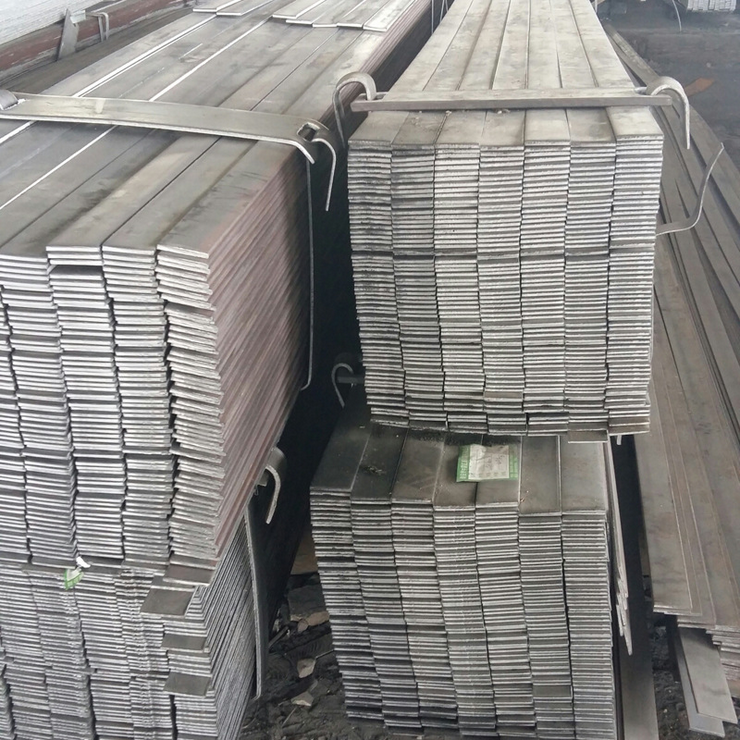
The most immediate difference encountered on the fabrication floor is dimensional consistency. True bar maintains strict thickness and width tolerances governed by specific ASTM standards, such as ASTM A6 for carbon steel and ASTM A484 for stainless steel. Because the material is constrained on all four sides during the rolling process, the resulting dimensions are highly predictable across the entire length of the bar. You can pull a piece from the rack, throw the calipers on it, and trust that the measurement will hold true ten feet down the line.
Plate-cut bars, however, are subject to the tolerances of the secondary cutting method. A plasma-cut edge will have a different width tolerance and edge bevel compared to a precision-sawed edge. Furthermore, fabricators often encounter the issue of nominal versus actual thickness. A 3/16" bar might measure differently depending on its origin. A true bar adheres to merchant bar tolerances, while a slit coil or plate adheres to plate thickness tolerances, which generally allow for a wider variance in the actual gauge.
The edge condition directly impacts handling safety, aesthetic finish, and welding preparation. The mill edge of a true bar is generally smooth and uniform. It is safe to handle straight off the delivery truck and is ready for use in exposed structural applications without requiring grinding or deburring. Welders appreciate this because they do not have to spend twenty minutes with an angle grinder prepping a joint before striking an arc.
In contrast, the cut edge of a plate requires careful evaluation. Sheared edges exhibit mechanical roll-over on the top surface and sharp burrs on the bottom. If the plate is flame or plasma-cut, the thermal process creates a Heat Affected Zone (HAZ) along the edge. This HAZ alters the localized hardness of the steel, making it significantly more difficult to drill or machine without specialized tooling. If you try to run a standard high-speed steel drill bit through a plasma-cut edge, you will burn the bit up in seconds.
Metallurgical grain flow plays a crucial role in the mechanical performance of steel components. The hot-rolling process aligns the grain structure longitudinally in a true bar. This longitudinal alignment optimizes tensile strength and fatigue resistance along the length of the material, making it ideal for load-bearing beams and tension members. The steel is inherently stronger when the load is applied parallel to this grain flow.
When cutting a rectangular piece from a larger steel plate, the grain direction depends entirely on how the part was nested during the cutting program. If the part is cut perpendicular to the plate's original rolling direction, it results in cross-grain orientations. This cross-grain structure can negatively impact the material's bending characteristics, increasing the risk of cracking during press brake operations and reducing overall load-bearing performance under cyclical stress. A press brake operator must know the grain direction before bending, otherwise, the outer radius of the bend will fracture.
The origin of the material heavily influences the time required for downstream machining. Edge hardening on flame-cut plates presents a significant hurdle. Machining through a HAZ requires slower feeds, reduced spindle speeds, and rigid setups to prevent tool deflection. This increases tool wear and extends cycle times. You cannot simply throw a plasma-cut strip into a CNC mill and run it at the same speeds as cold-drawn stock.
Squareness is another critical factor for precision machining. True cold-drawn bar offers sharp, square corners that sit perfectly flat in a milling vise. Hot-rolled bar has slightly rounded corners, but sheared plate often presents a trapezoidal cross-section due to the shearing blade's fracture angle. Squaring up a sheared plate edge requires an initial roughing pass simply to establish a true 90-degree reference surface.
Clamp the sheared piece securely in the vise, accounting for the trapezoidal edge.
Run a heavy roughing endmill to remove the work-hardened fracture zone.
Flip the part and machine the opposite side to establish parallel surfaces.
Deburr the newly machined sharp edges.
Procurement strategies must align with production volumes. For high-volume manufacturing, standard structural bar is highly scalable. It is readily available from service centers in predictable, standardized lengths, typically 20-foot sections. This predictability allows for optimized automated sawing and continuous feeding into CNC equipment. You order a bundle, load it into the bar feeder, and let the machine run lights-out.
Conversely, plate cutting shines in custom-volume procurement. When a project requires non-standard widths or short-run custom components where mill minimums for true bar cannot be met, cutting from plate is the most viable solution. It allows fabricators to acquire exact dimensions without waiting for a custom mill roll cycle. If you need a 7.375-inch wide strip, you will not find that on a standard bar rack. You must cut it from a plate.
Material traceability is non-negotiable in structural and pressure-vessel applications. ASTM specifications apply differently to bar products versus plate products, even if the chemical composition is identical. For example, ASTM A36 covers carbon structural steel, but the testing protocols and yield strength requirements can vary slightly depending on whether the material is certified as a plate or a bar.
It is vital to ensure that the Material Test Reports (MTRs) match the specific product form required by the engineering drawings. Substituting a plate-cut bar when the drawing explicitly calls for a certified mill bar can lead to compliance failures during third-party structural inspections. The inspector will check the heat numbers on the MTR against the physical tags on the material. If the paperwork says "Plate" and the drawing says "Bar," you have a problem.
Evaluating material selection based solely on the invoice price per pound is a common procurement error. Plate is often cheaper per pound than true bar due to the massive scale of plate rolling mills. However, the cost of converting that plate into a usable bar—through cutting, edge milling, and squaring—can quickly negate any initial material savings. You might save a few cents per pound on the raw material, but you will spend dollars per pound fixing the edges.
Fabricators must calculate the hidden expenses associated with processing cut plate. Increased cycle times to machine hardened edges, accelerated tool wear, and the labor required to deburr sheared parts add significant overhead. When these processing expenses are factored in, standard mill bar often presents a more economical solution for linear components. A machinist's hourly rate will quickly eat up any savings realized by the purchasing department.
Scrap management directly impacts project profitability. Purchasing standard lengths of mill bar minimizes scrap for linear applications. Fabricators can optimize cut lists to utilize the entire 20-foot stick with minimal drop. If you need 4-foot sections, you get exactly five pieces out of a 20-foot bar with only the saw kerf as waste.
On the other hand, flat steel plate offers superior yield optimization for complex, multi-part assemblies. By utilizing advanced nesting software, fabricators can arrange various custom rectangular shapes across a single large plate, maximizing material usage and reducing overall waste for non-standard dimensions. The software rotates and fits the parts together like a puzzle, ensuring the skeleton left behind is as light as possible.
The mechanical shearing process introduces immense localized stress into the steel. When a narrow strip is sheared from a large plate, this released stress causes the resulting piece to twist, bow, or develop camber (a curve along the edge). A cambered piece is notoriously difficult to feed into automated CNC machinery and requires heavy clamping to weld flat. If you lay a cambered strip on a layout table, it will rock back and forth.
To mitigate this risk, specify stress-relieved plate prior to cutting. Alternatively, opt for precision saw-cutting or laser cutting over mechanical shearing, as these methods introduce far less mechanical stress. For applications requiring strict straightness tolerances over long spans, mandating true mill bar is the most effective safeguard. You cannot easily hammer a twisted piece of half-inch steel back into a perfectly straight line.
Ambiguity on purchase orders is a primary cause of material rejection. Ordering a generic "flat bar" from a service center without specifying the manufacturing origin may result in receiving gauered plate. This leads to unexpected edge conditions, hardened zones, and dimensional variances arriving on the shop floor. The receiving department unloads the truck, and the shop foreman immediately realizes the material is wrong for the job.
Establish strict purchasing nomenclature to eliminate this risk. Purchase orders must explicitly state "True Mill Edge Flat Bar" or "Machined Edge Cut Plate." Clear communication with the steel supplier regarding the intended application ensures the correct material format is delivered.
Poor PO Description | Correct PO Description | Expected Outcome |
|---|---|---|
1/4 x 2 Flat Bar | 1/4" x 2" True Mill Edge Flat Bar, ASTM A36 | Guarantees a rolled edge, safe for exposed use. |
3/8 x 4 Steel Strip | 3/8" x 4" Sheared Plate, ASTM A36 | Supplier knows edge condition is not critical. |
The choice between flat bar and flat steel plate is a critical engineering decision rooted in edge requirements, machining capacity, and structural tolerances. Treating them as identical materials ignores the metallurgical realities of their manufacturing processes. Specify true bar when edge condition, straightness, and longitudinal grain strength are critical to the application. Specify cut flat steel plate when the project requires non-standard widths or heavy thicknesses exceeding standard bar capabilities.
To optimize your material selection process, execute the following steps:
Audit your current engineering drawings to verify that material callouts explicitly define edge conditions and tolerance requirements.
Revise your procurement templates to eliminate ambiguous terminology like generic "bar stock" and enforce strict naming conventions.
Update your CNC machining feeds and speeds libraries to account for the hardened edges of thermally cut plate materials.
Require your suppliers to provide MTRs prior to delivery to verify the material classification matches the purchase order.
A: Standard flat bar tolerances vary by manufacturing method and size, but generally adhere to strict ASTM specifications for width and thickness. This offers tighter out-of-the-box consistency and less variance than sheared or plasma-cut plate.
A: Yes, cut plate can substitute for structural steel flat bar. However, engineering requirements must account for potential differences in edge condition, camber, hardness, and cross-grain direction.
A: A gauered flat bar is a rectangular steel piece that has been sheared, slit, or cut from a larger steel coil or flat steel plate, rather than being hot-rolled to its final width at the steel mill.
A: A 3/16" true bar is manufactured to merchant bar tolerances, while a 3/16" piece cut from a plate adheres to plate thickness tolerances. These different ASTM standards allow for varying acceptable ranges of actual thickness.
A: It can. True bars have a longitudinal grain structure that optimizes tensile strength. Cutting a bar from a plate may result in a cross-grain orientation, which can reduce bending fatigue resistance and load-bearing performance.
A: To avoid the bow or twist caused by the mechanical stress of shearing, specify stress-relieved plate, request saw-cutting instead of shearing, or simply order true mill bar for applications requiring strict straightness.