Views: 0 Author: Site Editor Publish Time: 2026-06-10 Origin: Site


Sourcing structural steel correctly dictates project survival. Inconsistent rebar quality compromises project safety. It delays construction timelines and increases compliance risks. You need materials you can trust. This guide delivers a technical and logistical evaluation of sourcing hot-rolled Steel Rebar Deformed Bar. We specifically focus on Chinese standards HRB400 and HRB500. These grades currently dominate global supply chains. Our objective is clear. We equip procurement managers and lead engineers. You will learn the exact specifications and quality verification methods required. We also cover the supply chain criteria needed to vet and shortlist a reliable international manufacturer. Read on to master international rebar procurement.
Yield Strength Variations: HRB400 provides a minimum yield strength of 400 MPa for general construction, while HRB500 offers 500 MPa, suited for high-rise and seismic applications.
Global Equivalencies: Understand how HRB grades map to international frameworks like ASTM A615 and BS4449 to ensure local compliance.
Risk Mitigation: Authentic Mill Test Certificates (MTC) and strict control over negative weight tolerances are non-negotiable for verifying "prime quality" steel.
Logistics Optimization: Sourcing bulk rebar alongside related structural materials can significantly reduce landed costs per metric ton.
Selecting the right steel grade impacts structural integrity and project budget directly. Over-speccing materials increases initial construction costs unnecessarily. Under-speccing risks catastrophic structural failure. Engineers must strike a careful balance. Procurement teams need to source grades perfectly matched to architectural blueprints. Local building codes also dictate material minimums. Understanding the precise capabilities of different steel grades solves this problem. It allows buyers to optimize expenditure while maintaining absolute safety.
HRB400 serves as the global workhorse for concrete reinforcement. It maps closely to the US Grade 60 standard. This grade delivers a minimum yield strength of 400 MPa. Builders rely on it heavily for standard commercial and residential structures. The material offers an ideal balance. It combines excellent tensile strength and necessary ductility. Workers can cut and bend these bars on-site easily. HRB400 handles standard load-bearing walls, foundations, and slab reinforcements perfectly. It remains the most commonly ordered grade worldwide.
Heavy infrastructure demands superior load-bearing capabilities. HRB500 answers this call. It corresponds roughly to Grade 75 steel. The grade guarantees a minimum yield strength of 500 MPa. Engineers specify HRB500 for high-rise buildings and expansive bridges. It also plays a vital role in seismic-resistant designs. The higher yield strength allows concrete columns to withstand extreme lateral forces. Earthquakes apply massive stress to structures. HRB500 absorbs these shocks better before permanent deformation occurs. Using this grade ensures critical infrastructure survives extreme environmental events.
Upgrading to HRB500 introduces a price premium. Manufacturers expend more energy and alloying elements to achieve 500 MPa. Buyers often ask if the extra expense makes sense. In many cases, it does. The higher strength allows engineers to use less total steel volume. A project might require fewer bars or smaller diameters to achieve the same structural safety. This volume reduction frequently offsets the higher per-ton material cost. Less steel also means lower freight fees and faster installation times. Smart procurement teams calculate these offsetting savings carefully.
Steel strength comes from its chemical makeup. Carbon is the primary hardening agent. However, high carbon levels reduce weldability significantly. Brittle welds fail under stress. To evaluate this, engineers calculate the Carbon Equivalent Value (CEV). Top-tier suppliers balance strength and weldability perfectly. They use a technique called micro-alloying. Instead of dumping excess carbon into the mix, they add trace amounts of Vanadium. Vanadium refines the steel grain structure. It increases yield strength while keeping the CEV low. This ensures the bars remain highly weldable on the job site.
Rebar sizing follows strict international standardizations. Diameters generally range from 8mm to 40mm. Housing construction heavily favors the 12mm size. This specific diameter offers excellent versatility for slabs and columns. Buyers usually order steel bars in standard lengths. Mills produce them in 6-meter and 12-meter segments. The 6-meter lengths fit easily into standard 20-foot shipping containers. The 12-meter lengths require 40-foot containers or break-bulk shipping vessels. Specifying the correct length upfront prevents expensive on-site cutting delays.
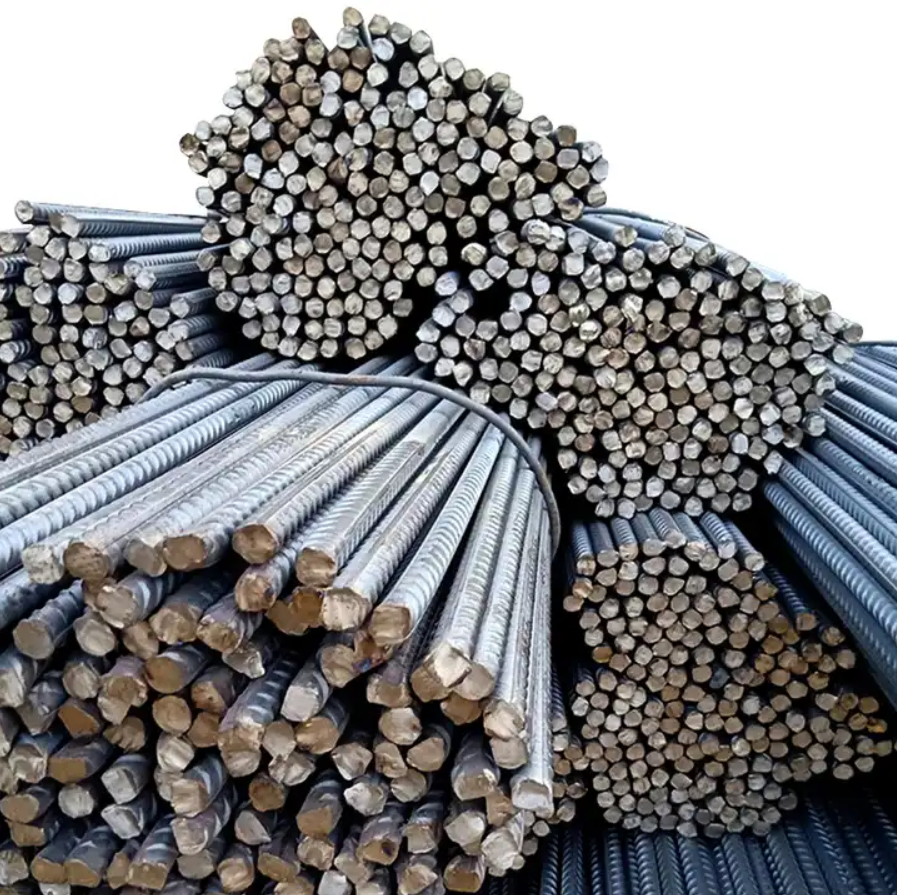
Look closely at any reinforcement bar. You will notice a distinct deformed surface. These ribs or crescent shapes serve a vital engineering purpose. Concrete and steel must act as a single composite material. Smooth bars slip out of cured concrete under heavy tension. The deformed ribs lock the steel mechanically into the concrete matrix. This maximizes bonding strength. Standard GB/T 1499.2 dictates the precise height and spacing of these ribs. Compliant geometry ensures load transfers seamlessly between the concrete and the reinforcement frame.
International procurement requires translating local standards. Chinese mills produce rebar according to GB/T 1499.2. You must know how this maps to your local building codes. We provide a direct evaluation lens below.
Chinese Standard (GB/T 1499.2) | US Equivalent (ASTM A615) | European Equivalent (EN 10080) | Minimum Yield Strength |
|---|---|---|---|
HRB400 | Grade 60 | S400 / B400B | 400 MPa |
HRB500 | Grade 75 | S500 / B500B | 500 MPa |
Engineers use these equivalencies for cross-border approvals. Always submit mill certificates to your local structural engineer before finalizing an international purchase.
International steel trading carries hidden risks. The "minus tolerance" trap frequently catches inexperienced buyers. Suppliers manipulate weight tolerances to under-deliver actual steel volume. Steel is sold by theoretical weight or actual weight. Unethical vendors quote artificially low prices. They then roll the bars slightly thinner than the standard diameter. A 12mm bar might actually measure 11.2mm. Industry standards permit some deviation. Acceptable standard deviations usually range from ±4% to ±5%, depending on the diameter. Anything beyond this compromises structural integrity. You must specify acceptable tolerance limits clearly in your contract.
Material origin matters immensely. Authentic rebar is hot-rolled directly from prime steel billets. These billets guarantee uniform chemical composition. Conversely, shady suppliers sometimes melt down degraded scrap metal. They re-roll this scrap into new bars. Re-rolled scrap contains unpredictable impurities. It suffers from inconsistent tensile strength. It may snap during on-site bending. You must demand proof of material origin. Reputable mills gladly provide billet traceability records. This verifies you are purchasing prime quality steel.
Verifying quality requires paperwork. Do not release final payment without proper documentation. You must secure a verifiable Mill Test Certificate (MTC). The MTC acts as the steel's passport. It lists the exact chemical composition and physical test results from the factory. Furthermore, the heat numbers on the MTC must match the metal tags attached to the steel bundles perfectly. If the numbers do not align, the documentation is fake. Rigorous document matching prevents substitution fraud.
Never rely solely on vendor promises. Smart procurement managers mandate external verification. We strongly recommend integrating third-party inspections into your procurement contract.
Hire recognized agencies like SGS or Bureau Veritas (BV).
Instruct them to conduct pre-shipment inspections at the loading port.
Require inspectors to measure bar diameters using digital calipers.
Have them weigh random bundles to verify minus tolerance compliance.
Ask them to cross-check the MTC heat numbers against the physical cargo tags.
This independent oversight guarantees you receive exactly what you paid for.
Ocean freight stresses heavy cargo. Proper packaging prevents transit damage. Standard export packing groups rebar into 2 to 3-ton bundles. Steel mills secure these bundles tightly using heavy-duty steel wire straps. A minimum of four to six strapping points is required per 6-meter bundle. This prevents the bars from sliding loose inside the container. Proper bundling also simplifies site offloading. Construction cranes can lift standardized bundles safely. Poorly strapped cargo endangers dock workers and causes expensive unloading delays.
Shipping air is expensive. Smart buyers maximize freight efficiency through strategic consolidation. Sourcing multi-product orders from a single capable supplier lowers logistics expenses. Consider combining a core order of rebar alongside other essential structural materials. For example, you can load H Beam Steel for heavy framework support. You can add Steel Plate for custom gussets and base connections. Fill the remaining container gaps using Galvanized Steel Wire for tying the rebar grids. Finally, include Steel Flat Bar for miscellaneous bracket fabrication. Utilizing break-bulk or containerized shipping for these mixed loads lowers your overall landed costs substantially.
Setting realistic baseline expectations keeps construction schedules on track. Steel mills do not produce custom runs for small volumes. The standard Minimum Order Quantity (MOQ) typically starts at 25 metric tons. This equals the maximum weight limit of one standard 20-foot shipping container. Production-to-port timelines vary based on mill schedules. Generally, expect a 15 to 30-day lead time for standard diameters. Adding ocean transit time means you should initiate orders at least 60 days before the materials are needed on-site.
The Chinese steel market features both massive mills and nimble trading companies. You must assess supplier capabilities accurately. Does the vendor own the actual mill? True manufacturers offer massive production capacity. They handle phased, high-tonnage rollouts easily without defaulting. Trading companies might lack direct control over production schedules. However, skilled traders offer better agility. They can consolidate mixed steel products from various factories into one shipment. Choose your partner based on whether you need raw volume or mixed-product flexibility.
Steel pricing fluctuates daily based on iron ore and coal markets. You must differentiate between volatile spot pricing and fixed-contract pricing. Spot prices look attractive but can jump suddenly before production begins. Fixed pricing guarantees your budget. Ensure your supplier outlines clear delivery terms. Clarify whether the quote is FOB (Free On Board), CFR (Cost and Freight), or CIF (Cost, Insurance, and Freight). Hidden logistics fees ruin procurement budgets quickly.
Structuring a professional Request for Quote (RFQ) signals you are a serious buyer. It also eliminates miscommunication. Guide your purchasing team to include the following details in your initial RFQ:
Specify the exact grade required (e.g., HRB400 or HRB500).
List the exact diameters and total tonnage per size.
State the required bar lengths (6m or 12m).
Name your final destination port clearly.
Request sample Mill Test Certificates upfront.
Specify your acceptable minus tolerance percentage.
Sourcing structural steel successfully demands rigorous evaluation. You must specify the exact grade, choosing between HRB400 and HRB500 based on structural load requirements. Enforce strict quality controls to avoid the minus tolerance trap. Mandate authentic Mill Test Certificates and utilize third-party inspections to verify material origins. Finally, optimize your shipping strategy by consolidating mixed steel products to reduce landed costs.
Remember, partnering with a supplier offering transparent documentation and scalable logistics equals the importance of the per-ton price. A cheap quote from an unreliable vendor ultimately costs more in delays and structural risks. Take control of your supply chain today. Submit your detailed project specifications to a vetted supplier for a comprehensive technical review and a competitive, transparent quote.
A: The "E" designation stands for earthquake or seismic resistance. While both grades share a 400 MPa yield strength, HRB 400E meets higher ductility requirements. It can stretch further without snapping under extreme lateral loads. Engineers mandate the "E" variant specifically in active seismic zones to prevent sudden structural collapse during earthquakes.
A: Yes, it is common practice globally. The mechanical and chemical properties of HRB400/500 frequently overlap with ASTM A615 Grade 60/75. However, local building authorities require proof. You must obtain local structural engineer approval and provide independent third-party laboratory testing to bridge any certification gaps officially.
A: Most international steel mills operate on standard B2B terms. The most common structure is a 30% T/T (Telegraphic Transfer) advance payment to initiate production. The remaining 70% balance is paid against the copy of the Bill of Lading. For exceptionally large orders, suppliers often accept 100% Irrevocable L/C (Letter of Credit) at sight.
A: Standard orders usually consist of straight 6-meter or 12-meter bars. However, advanced steel suppliers and processing centers do offer pre-fabrication services. They can cut, bend, and shape the rebar precisely according to your project blueprints before containerization. This reduces on-site labor costs and speeds up construction timelines.