Views: 288 Author: Site Editor Publish Time: 2026-06-29 Origin: Site


Sourcing industrial-grade steel piping requires balancing upfront material costs and long-term structural integrity. You need robust corrosion resistance for harsh environments. However, procurement managers often face discrepancies in zinc coating uniformity. They battle inconsistent dimensional tolerances and incomplete compliance documentation from generic suppliers. These issues frequently cause unexpected project delays. They also compromise the safety of load-bearing structures.
Finding a reliable manufacturing partner is critical for construction success. We offer a transparent breakdown of hot-dipped galvanized round tube specifications. You will learn about global compliance frameworks like ASTM and EN standards. We also explore essential supplier evaluation criteria to mitigate purchasing risks. This comprehensive guide streamlines your procurement decisions. It helps you verify metallurgical quality, optimize freight logistics, and secure long-lasting structural materials.
Process matters: Hot-dipped galvanization offers superior localized defect protection and thicker zinc coatings compared to pre-galvanized alternatives.
Verifiable compliance: Authentic supply chains mandate Mill Test Certificates (MTC) proving alignment with ASTM, BS, or EN standards.
Consolidated procurement: Sourcing related materials (square tubes, angle bars, steel channels) from a single supplier reduces logistical overhead and ensures batch consistency.
Factory-level value-added services (cutting, threading) minimize on-site labor and material waste.
Choosing the right zinc coating process defines the durability of your infrastructure. Hot-dipped galvanization involves submerging fabricated steel into a bath of molten zinc. This process creates a robust metallurgical bond. Pre-galvanization applies a thinner zinc layer to sheet metal before rolling and welding. You must understand these differences to ensure proper material selection.
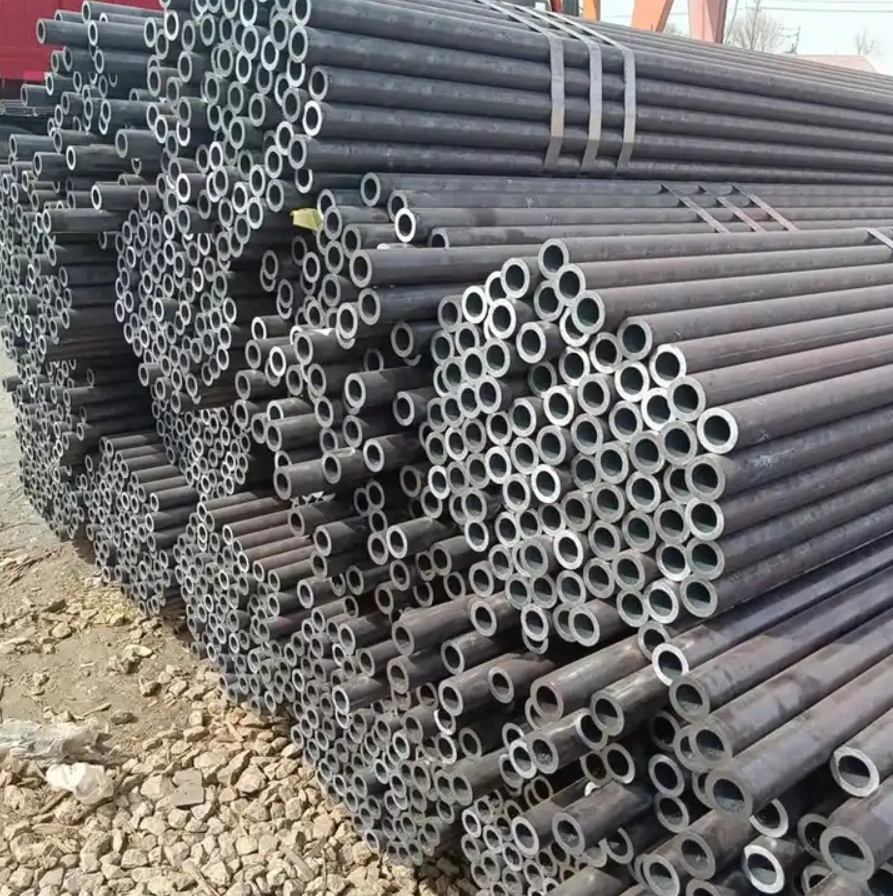
Coating thickness directly dictates the corrosion resistance of the material. We measure zinc layers in microns or ounces per square foot (oz/ft²). Pre-galvanized tubes generally offer a coating thickness between 15 and 40 microns. This suits light indoor applications. However, a Galvanized Round Steel Pipe produced via the hot-dip method achieves 50 to 100+ microns. You need this extreme depth for heavy-duty, outdoor, or high-salinity environments. Coastal infrastructure and Middle Eastern construction projects demand hot-dipped protection to combat constant moisture and salt exposure.
The hot-dip process generates multiple zinc-iron alloy layers. The molten zinc reacts with the steel substrate at approximately 840°F (449°C). This reaction forms tightly bonded transitional layers (Zeta, Delta, and Gamma). These inner layers are actually harder than the base steel. They resist mechanical damage during transport and rough site installation. If the outer pure zinc layer scratches, the underlying alloy continues protecting the steel. Pre-galvanized pipes lack this deep alloy structure. Their weld seams remain particularly vulnerable unless heavily retreated.
Procurement teams often notice an initial cost premium for hot-dipped pipes. You must weigh this against the extended lifecycle of the material. In rural environments, hot-dipped GI pipes often last over 50 years without maintenance. In severe marine or industrial zones, they reliably exceed 20 years of service. Pre-galvanized pipes degrade much faster in these harsh conditions. Replacing failed pipes incurs massive labor costs and operational downtime.
Feature | Hot-Dipped Galvanized Pipe | Pre-Galvanized Pipe |
|---|---|---|
Coating Thickness | 50 - 100+ microns | 15 - 40 microns |
Weld Seam Protection | Fully coated internally and externally | Vulnerable; requires thermal spraying |
Best Application | Harsh outdoors, marine, heavy structural | Indoors, light structural, dry environments |
Mechanical Resistance | Excellent (hard alloy layers) | Moderate (softer pure zinc layer) |
You cannot secure structural integrity through guesswork. Rigorous dimensional accuracy and standardized compliance guarantee safety. Authentic suppliers provide detailed documentation matching global engineering requirements. You must verify these parameters before finalizing any bulk order.
Engineers design fluid transport and scaffolding systems around precise dimensional tolerances. Standard Outer Diameter (OD) ranges must remain consistent to ensure fittings attach correctly. Wall thickness is universally classified using the Schedule system. Schedule 40 offers standard strength for regular fluid pressure. Schedule 80 provides a thicker wall for high-pressure industrial applications. Length tolerances also matter significantly. Standard lengths usually span 5.8 meters to 6 meters for container shipping. Tight length tolerances prevent excessive on-site cutting.
Different global regions specify varying standards for galvanized tubes. You should familiarize yourself with the primary international compliance frameworks. This ensures your sourced materials meet local building codes.
ASTM A53: This is the premier North American standard. It covers seamless and welded black and hot-dipped galvanized steel pipes. ASTM A53 Grade B requires higher tensile and yield strength than Grade A. Engineers specify Grade B for critical load-bearing applications.
BS 1387 / EN 10255: These are the standard European specifications. They cover non-alloy steel tubes suitable for welding and threading. The standard categorizes pipes into Light, Medium, and Heavy classes based on wall thickness.
JIS G3442: This Japanese standard governs galvanized steel pipes used for water distribution. It focuses heavily on the interior zinc coating quality to prevent water contamination.
Quality assurance extends beyond simple visual inspections. You must demand specific performance tests. Hydrostatic testing is non-negotiable for fluid transport pipes. The manufacturer seals the pipe and fills it with water under high pressure. This verifies that the weld seam will not leak under stress. Non-destructive electric testing (NDT), such as eddy current testing, is also vital. NDT scans the entire weld seam for invisible micro-cracks or bonding failures.
Managing multiple vendors creates logistical nightmares. You face misaligned delivery schedules and inconsistent material quality. Consolidating your procurement with a single capable supplier solves these issues. It streamlines communication, reduces freight overhead, and ensures matching galvanization standards across all structural components.
System sourcing treats a construction project as a unified framework rather than isolated parts. When you order all steel profiles from one factory, they utilize the same zinc bath. They follow the same pickling and fluxing procedures. This guarantees a uniform aesthetic finish across your site. It also ensures consistent metallurgical behavior when different components interact. You avoid the galvanic corrosion risks associated with mixing mismatched steel grades.
Modern structural designs combine different steel shapes for maximum load distribution. A round pipe alone rarely completes a complex framing job. You need specific profiles designed for targeted mechanical tasks.
Integrating a Square Steel Tube provides excellent primary load-bearing support. Square profiles resist torsional twisting better in certain directional load scenarios. You can use them for main warehouse columns alongside round piping for fluid utility lines.
Utilizing a Steel Angle Bar is critical for bracing. Angle bars reinforce 90-degree intersections. They prevent swaying in tall scaffolding structures. They also serve as highly effective pipe-support brackets.
Adding a Steel Channel creates robust framing tracks. Channels provide a flat back surface for easy wall mounting. They house and protect multiple utility lines running across industrial ceilings.
Bulk shipping revolves around maximizing container space. Steel pipes are heavy but often leave empty volumetric gaps in shipping containers. You can fill these gaps by procuring necessary accessories in the same shipment. Ordering Galvanized Steel Wire optimizes your freight volume perfectly. Construction teams constantly need this wire for binding rebar, erecting temporary fencing, and tensioning suspension setups. Combining these orders reduces your overall shipping expenditure significantly.
The global steel market contains thousands of trading companies masking themselves as primary manufacturers. Vetting your supplier protects your project budget and timeline. You must evaluate their documentation transparency, export packaging capabilities, and true production capacity.
Trust but verify. You must demand mandatory Mill Test Certificates (MTCs) before authorizing shipment. An authentic MTC provides complete traceability back to the raw steel heat batch. It details the exact chemical composition (carbon, manganese, phosphorus, sulfur limits). It also records precise mechanical properties, including yield strength and tensile strength. If a supplier hesitates to provide an EN 10204 Type 3.1 MTC, you should look elsewhere.
Ocean freight exposes steel pipes to high humidity, salt air, and rapid temperature fluctuations. Poor packaging destroys galvanized materials before they even arrive. You must evaluate the supplier's seaworthy packing methods. Pipes should be tightly bundled with steel straps. The ends require durable plastic caps to protect threaded sections and prevent internal debris accumulation.
Most importantly, the supplier must prevent "white rust." This powdery white substance is zinc hydroxide. It forms when galvanized surfaces touch trapped moisture without adequate airflow. Quality suppliers apply passivation treatments to the pipes. They also use moisture-absorbing desiccants and ensure proper container ventilation during oceanic transit.
Large-scale construction phases require reliable, staggered material deliveries. You must assess the supplier's Minimum Order Quantities (MOQs) and actual production lead times. A reputable factory easily handles multi-container monthly shipments. They maintain large raw steel inventories to buffer against market shortages. Discuss penalty clauses for delayed shipments during your contract negotiations. This ensures the supplier prioritizes your critical project timelines.
Purchasing raw pipes is only the first step. Preparing those pipes for installation requires significant labor. Premium suppliers offer in-house value-added services. These factory-level customizations save extensive field labor and prevent expensive on-site material waste.
Field cutting relies on manual tools and varied operator skill levels. This often leads to jagged edges and inaccurate lengths. Factory-direct precision cutting uses automated band saws and laser systems. The factory delivers pipes cut exactly to your engineered blueprints. They also perform mechanical deburring to remove sharp metal shavings. This ensures safe handling and immediate readiness for installation. You significantly reduce your site assembly hours through this method.
Pipe joining methods vary widely across different engineering disciplines. A capable supplier provides multiple end treatments straight from the production line. You can specify threaded ends (NPT or BSPT) supplied with matching steel couplings. These are standard for low-pressure fluid transport. Beveled ends are essential for secure butt-welding. Grooved ends serve mechanical joining systems, like Victaulic couplings, commonly used in fire sprinkler installations. Receiving pre-treated ends eliminates the need for expensive mobile threading machines.
Sometimes standard galvanization requires extra protection during long-term storage. Suppliers can offer specialized surface customizations. Clear-coat sealants provide a temporary barrier against moisture and handling marks. Passivation treatments chemically stabilize the outer zinc layer. These minor additions drastically extend the pristine shelf-life of the zinc coating before final installation. You maintain a clean, professional aesthetic for exposed architectural frameworks.
Sourcing the right galvanized pipes requires strict attention to detail. You must prioritize zinc thickness requirements, dimensional tolerances, and verifiable documentation. Do not compromise on global standards like ASTM or EN. By consolidating your procurement with related steel profiles, you build a more robust, consistent structural framework.
To move forward effectively, implement these action steps:
Request a sample Mill Test Certificate (MTC) from your prospective supplier immediately.
Confirm the exact international compliance standard required by your local building authority.
Submit a detailed RFQ that specifies your desired wall thickness, end-treatments, and packaging requirements.
Include secondary structural materials like angle bars and square tubes in your quote to optimize freight costs.
A: Standard thickness varies by pipe specification. Under ASTM A53, hot-dipped galvanized pipes require a minimum average coating weight of 1.8 oz/ft² (roughly 80 microns). EN 10255 standards dictate similar minimums. Thicker walled pipes typically retain slightly deeper zinc layers during the hot-dip process.
A: Yes, they can be welded. However, welding vaporizes the zinc coating near the joint, producing toxic zinc oxide fumes. Welders require proper ventilation and respiratory protection. After welding, you must immediately treat the exposed steel seam with a high-quality zinc-rich cold galvanizing spray to restore corrosion resistance.
A: A reliable MTC includes the manufacturer's details, heat batch number, and applicable compliance standard (e.g., ASTM A53). It must list the chemical makeup, specifically carbon, manganese, phosphorus, and sulfur levels. Mechanical properties like yield strength, tensile strength, elongation percentages, and hydro-test results are also mandatory.
A: Quality suppliers prevent white rust through chemical passivation immediately after galvanizing. This stabilizes the zinc surface. They also ensure the pipes are completely dry before bundling. Advanced moisture-controlled packaging includes using desiccants inside the shipping container and ensuring proper ventilation to prevent condensation buildup during transit.