Views: 366 Author: Site Editor Publish Time: 2026-07-03 Origin: Site


Balancing upfront material expenses and long-term structural integrity in corrosive environments presents a constant challenge for procurement managers. Heavy rains, salt spray, and extreme humidity aggressively attack unprotected metals every day. Left untreated, standard carbon steel quickly oxidizes. This rapid degradation leads to premature structural failures and dangerous safety hazards on the job site. Industrial buyers need a reliable defense mechanism to protect outdoor frameworks without exceeding initial project budgets.
Hot-dipped galvanized steel flat bar offers the ideal solution. It perfectly balances the superior yield strength and formability of structural mild steel with low-maintenance longevity. This guide provides an objective, step-by-step framework for fabrication engineers and buyers. You will learn how to evaluate specific material grades, understand complex processing realities, and confidently vet suppliers for commercial steel orders.
Lifetime ROI: Hot-dipped galvanized flat bars yield lower total life-cycle costs compared to painted or oiled alternatives due to zero-maintenance corrosion resistance.
Grade Specifications: Understanding the difference between mill-rolled bars (ASTM A36/A572) and slit-coil strips (A1011) is critical for structural compliance.
Processing Risks: Working with galvanized mild steel requires specific safety protocols, particularly concerning hazardous fumes during welding or thermal cutting.
Supplier Transparency: Reliable sourcing requires Mill Test Reports (MTRs), transparent Merchant Bar Quality (MBQ) standards, and precision cut-to-size capabilities.
Specifying materials for outdoor, marine, or high-humidity industrial applications demands a strict focus on corrosion resistance. Standard mild steel offers excellent structural strength. However, it fails quickly when exposed to moisture. Many contractors temporarily oil untreated steel or apply basic primer coats to save money upfront. This approach merely delays the inevitable. The hidden expenses of untreated metal accumulate rapidly.
A bare steel framework requires continuous surface preparation, repainting, and rust mitigation. These recurring maintenance tasks consume massive amounts of labor and cause costly operational downtime. When you factor in these recurring expenses, standard painted steel becomes highly inefficient.
You can solve this problem by sourcing Galvanized Steel Flat Bar. The ASTM A123 hot-dipped galvanizing process immerses the metal in molten zinc. This creates a metallurgical bond between the steel base and the zinc coating. The initial purchase price is higher than raw black steel. Yet, the lifetime ROI is vastly superior. The zinc coating acts as a sacrificial anode. It protects the underlying steel from rust for decades without requiring any maintenance.
Procurement teams must also manage visual expectations. Hot-dip galvanizing prioritizes industrial protection over cosmetic aesthetics. The surface finish often exhibits a crystallized pattern known as "spangle." In some batches, you might see a semi-rough matte finish. These variations are normal chemical reactions. They do not compromise the structural integrity or corrosion resistance of the material.
Engineers and buyers must understand the underlying steel grades before they order galvanized bars. The zinc coating protects the metal, but the core grade dictates the load-bearing capacity.
ASTM A36 serves as the industry baseline for structural carbon steel. It remains highly cost-effective and extremely formable. You can easily cut, weld, and machine it. For heavier load-bearing requirements, engineers often upgrade to ASTM A572. This High-Strength Low-Alloy (HSLA) steel provides a minimum yield strength of 50 KSI. It allows structural designers to reduce material thickness while maintaining high load capacities.
You must also differentiate between mill-rolled bars and slit-coil strips. True flat bars come directly from the rolling mill. They feature slightly rounded edges and consistent dimensional tolerances. Conversely, manufacturers produce ASTM A1011 strips by slitting large steel coils. These slit strips have sharp, sheared edges. They often exhibit a slight natural camber or twist.
Furthermore, steel mills produce most flat bars to Merchant Bar Quality (MBQ) standards. MBQ represents a commercial grade engineered for structural utility. You should expect minor surface irregularities and some visible mill scale beneath the galvanization. MBQ is not intended for complex machining or highly polished architectural finishes.
If a project requires non-standard thicknesses or ultra-heavy gauges, standard flat bars might fall short. In these scenarios, fabricators must shear custom strips directly from Steel Plate to achieve the necessary dimensions.
Summary Chart: Common Steel Flat Bar Base Grades | |||
Material Grade | Production Method | Yield Strength | Best Application |
|---|---|---|---|
ASTM A36 | Mill Rolled | 36 KSI | General structural frames, brackets, and base plates. |
ASTM A572 (Gr 50) | Mill Rolled | 50 KSI | High-stress structural supports and heavy machinery. |
ASTM A1011 | Slit from Coil | Variable (Often 30-36 KSI) | Light-duty bracing, brackets, and sheet metal fabrication. |
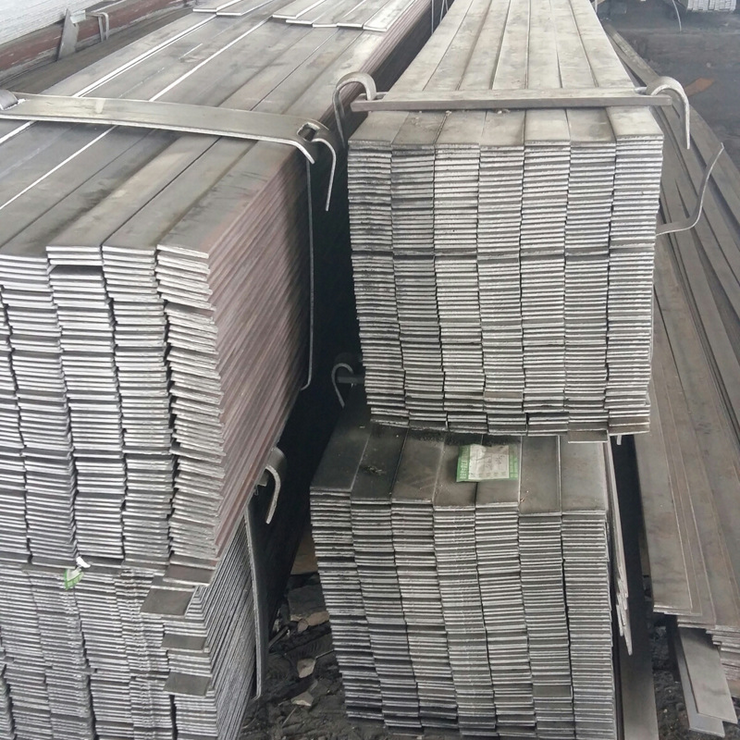
Galvanized flat bars rarely function alone. They act as essential connective tissue within broader structural assemblies. Fabricators frequently use them as heavy-duty base plates to anchor columns to concrete foundations. They also serve as cross-bracing to prevent lateral sway in tall structures, or as splice plates to join linear segments together.
System scalability depends heavily on profile compatibility. Fabrication engineers follow a specific logic when combining shapes. For instance, welding a flat bar across the open flanges of a Steel Channel creates a highly rigid, enclosed box tube for track systems. You can reinforce corner framing by gusseting a flat bar against a Steel Angle Bar. For massive structural columns, fabricators weld thick flat bars to the web of an H Beam Steel to stiffen the load-bearing flange connections.
Joining galvanized components requires careful attention to fastening tolerances. The hot-dip process adds a protective zinc layer that ranges from 2 to 4 mils in thickness. This extra coating alters the outer dimensions of the bar. It also decreases the internal diameter of any pre-punched holes. When bolting galvanized flat bars to other structural shapes, fabricators must oversize the bolt holes. This clearance prevents the fasteners from binding during field assembly.
Recommended Hole Clearances for Galvanized Fastening | ||
Bolt Diameter (Inches) | Standard Hole Diameter (Black Steel) | Oversized Hole Diameter (Galvanized Steel) |
|---|---|---|
1/2" | 9/16" | 5/8" |
5/8" | 11/16" | 13/16" |
3/4" | 13/16" | 15/16" |
1" | 1-1/16" | 1-3/16" |
Transforming raw galvanized bars into functional structural parts involves several shop realities. Mild steel like A36 is highly machinable. However, its lower carbon content makes the metal relatively soft. This softness can produce long, gummy chips during drilling or milling. These chips wrap around cutting tools and cause premature tool wear. Shop managers must optimize feed rates, lower spindle speeds, and flood the work area with high-quality cutting fluids.
Welding galvanized steel introduces a crucial risk factor: toxic fumes. When the intense heat of a welding arc or plasma cutter hits the zinc coating, it vaporizes the metal. Inhaling these hazardous zinc fumes causes "metal fume fever." This severe condition triggers flu-like symptoms, chills, fever, and intense chest pain.
Fabrication shops must strictly enforce safety protocols to mitigate this risk. Follow this exact numbered sequence before striking an arc on galvanized material:
Implement Local Exhaust Ventilation (LEV): Position a heavy-duty fume extractor directly over the weld zone to capture zinc vapors immediately.
Wear Appropriate PPE: Welders must wear P100 half-mask respirators designed specifically to filter out fine metal particulates. Standard dust masks offer zero protection.
Remove the Zinc Mechanically: Use an angle grinder with a flap disc to strip away the zinc coating and underlying mill scale at the joint. Expose bare, bright steel at least two inches back from the intended weld pool.
Execute the Weld: Weld the bare steel using standard mild steel filler metals, such as E7018 electrodes or ER70S-6 wire.
Once you cut, drill, or weld the material, you compromise the original zinc envelope. Bare steel is now exposed to the elements. You must treat all newly fabricated edges and welded joints immediately. Apply a premium zinc-rich cold galvanizing compound to these areas. This compound must contain at least 95% zinc in the dry film. It acts as a sacrificial barrier and restores continuous corrosion protection across the entire assembly.
Procuring commercial steel is not a mere commodity transaction. You are buying structural reliability. A poor supplier causes project delays, structural failures, and budget overruns. Procurement teams must audit potential vendors across several critical dimensions.
First, demand total material traceability. A trustworthy supplier readily provides Mill Test Reports (MTRs) for every batch of steel. These documents verify the exact chemical composition, including carbon and manganese levels. They also confirm the yield and tensile strength limits. If a vendor hesitates to produce an MTR, find another partner immediately.
Next, evaluate their internal processing capabilities. Many fabricators waste time and money re-cutting raw materials in-house. Look for suppliers offering tight-tolerance band saw or laser cutting services. Receiving materials pre-cut to your exact blueprints eliminates secondary processing and accelerates your production timeline.
Finally, assess their inventory depth. A strong supplier stocks flat bars in dozens of widths and thicknesses. They bridge the gap between delivering standard 20-foot commercial lengths and providing custom-cut rapid deployments.
Use a strategic shortlisting logic to finalize your vendor choice. Audit suppliers based on their historical lead times. Ask them how fast they can deliver a 50-ton structural package for a massive build. Then, ask how quickly they can fulfill a localized, quick-turn order for emergency repairs. The best suppliers handle both extremes with equal efficiency.
Specifying galvanized mild steel flat bar remains a highly strategic choice for modern fabrication. It delivers high durability and ensures low-maintenance lifespans for critical outdoor frameworks. While the upfront costs exceed raw black steel, the elimination of recurring rust mitigation ensures excellent long-term budget efficiency.
To maximize this material, engineering teams must align their mechanical requirements with the correct ASTM grades. They must also enforce strict shop safety protocols when welding zinc-coated profiles. Most importantly, sourcing from a transparent supplier guarantees material compliance and keeps project timelines on track.
Take action today. Prompt your procurement team to review current structural blueprints. Identify components exposed to weather or humidity. Then, contact your sales team with precise dimensions and ASTM requirements to request an accurate, volume-based quote.
A: No. Due to its low carbon content, A36 cannot be through-hardened. It lacks the necessary carbon structure to hold a deep temper. It can only be case-hardened (surface hardened) via a carburizing process.
A: Hot rolled is formed at extreme temperatures above the recrystallization threshold. This process results in looser dimensional tolerances, a scaly finish, and lower material costs. Cold rolled steel undergoes further processing at room temperature. It offers highly precise dimensions and a smooth finish, but at a premium price.
A: Yes. Mild carbon steel is strongly ferromagnetic. This property makes it highly suitable for magnetic lifting cranes and magnetic work-holding fixtures during shop fabrication and welding.
A: No. The hot-dip galvanizing process occurs at approximately 840°F (450°C). This temperature sits well below the steel's critical melting point. Therefore, it leaves the mechanical properties and yield strength of the underlying mild steel completely unchanged.