Views: 286 Author: Site Editor Publish Time: 2026-07-07 Origin: Site


Procuring industrial-grade wire demands a careful balance. You must weigh unit expenses against undeniable structural reliability daily. When you choose poorly, inconsistent zinc coatings or weak tensile strength lead directly to immediate on-site rework. Worse, they invite devastating long-term corrosion risks. Building foundations weaken silently under stress. This guide gives procurement teams and project managers a clear, evidence-based framework. You will learn how to evaluate a reliable Galvanized Steel Wire manufacturer correctly. We will show you how to mitigate supply chain risks effectively. You will also discover how to verify crucial product specifications before signing any bulk contract. We focus heavily on the critical decision stage of procurement. You will explore strict wire gauge tolerances, precise coating methods, and packaging durability rigorously. We also cover smart supplier consolidation strategies to streamline your complex logistics operations seamlessly.
Coating Dictates Lifespan: Selecting between electro-galvanized and hot-dipped zinc coatings directly impacts rust resistance and project suitability.
Mechanical Properties Matter: Binding wire must achieve strict annealing standards to ensure high flexibility without sacrificing tensile strength during twisting.
Vendor Accountability: Reliable manufacturers provide verifiable Mill Test Certificates (MTCs) detailing zinc weight (g/m²) and gauge accuracy (e.g., BWG20).
Procurement Efficiency: Sourcing complementary materials alongside GI wire reduces freight overhead and simplifies supply chain management.
When you procure cheap binding wire, initial savings quickly disappear. On-site failures cause massive operational delays. Substandard materials erode structural integrity relentlessly over time. You must understand the specific mechanics of corrosion vulnerability. Rust propagates aggressively in damp environments. When workers twist inferior wire tightly, the inadequate zinc coating flakes off immediately. This action exposes the bare steel underneath. Moisture easily attacks these unprotected spots. Rust then creeps deep into the main concrete reinforcement framework.
Tensile inconsistency creates severe operational friction daily. Brittle wire snaps sharply under high tension. It forces workers to re-tie structural joints continually. Conversely, overly soft wire stretches excessively during application. It fails to secure heavy reinforcement structures tightly. Concrete pours can shift loose rebar cages disastrously. Both extremes waste valuable labor hours and compromise safety.
Compliance risks add another heavy layer of danger. Using non-compliant binding materials invites strict legal liabilities. Independent inspectors frequently test commercial concrete reinforcements. If they discover uncertified wire, they halt construction immediately. This jeopardizes your entire project timeline.
Best Practice: Always mandate a pre-shipment tension test. This verifies optimal flexibility before containers leave the port.
Common Mistake: Buyers often focus solely on the per-ton price. They completely ignore critical elongation testing.
Understanding these solution categories is crucial. You must break down the two primary manufacturing approaches clearly. This knowledge determines the correct specification for your project.
Electro-galvanized wire features a significantly thinner zinc layer. It boasts a smoother, highly uniform finish. Manufacturers use an electrical current to bond zinc particles to the steel core. This process suits specific environments perfectly. You should specify it for indoor applications exclusively. It handles temporary binding tasks quite well. It also excels in environments facing minimal moisture exposure.
Hot-dipped galvanized (HDG) wire requires a completely different process. Producers submerge the raw steel directly into a 450°C molten zinc bath. This creates an exceptionally heavy zinc coating. It forms a superior metallurgical bond. HDG offers incredibly high resistance against harsh outdoor elements. You must specify HDG for outdoor construction. Heavy infrastructure demands it unconditionally. Long-term concrete reinforcement relies heavily on this durable barrier.
Let us examine the critical cost-to-lifespan ratio. Specifying HDG for heavy construction yields superior long-term durability. You will pay a higher initial per-ton price. However, this upfront investment prevents catastrophic rust failures entirely. It extends the structural lifespan by decades. We strongly advise calculating project value based on overall longevity rather than upfront expense.
Process Feature | Electro-Galvanized Specifications | Hot-Dipped Galvanized (HDG) Specifications |
|---|---|---|
Zinc Layer Weight | Thin (Typically 10-20 g/m²) | Thick (Typically 40-300+ g/m²) |
Surface Finish | Smooth, shiny, visually uniform | Slightly rough, matte appearance |
Primary Environment | Indoor, dry, climate-controlled conditions | Outdoor, marine, highly corrosive areas |
Rust Resistance | Low to Moderate | Extremely High |
You need objective metrics for auditing potential suppliers accurately. Do not rely merely on slick marketing claims. Evaluate their actual production capabilities rigorously.
Start with gauge tolerance and consistency. Verify their strict adherence to standard measurements. You must ensure precise diameter control continuously. BWG20 represents a very common Birmingham Wire Gauge standard. If a supplier fails to hold BWG20 dimensions tightly, automatic tying tools jam frequently. Manual tying becomes highly inconsistent across the job site.
Next, assess the critical annealing process. Thermal treatment protocols dictate mechanical success completely. Manufacturers heat the wire and cool it slowly. High-quality binding wire requires this optimal softness. Proper annealing prevents rapid worker fatigue during repetitive manual twists. It also completely eliminates structural snapping under intense tension.
Zinc coating weight demands fully transparent data. You must ask for grams per square meter (g/m²) measurements explicitly. Higher weight strictly equals prolonged rust resistance. A supplier hiding this metric usually provides inferior coatings.
Finally, test coating adhesion physically. Bend the wire tightly. Wrap it tightly around its own diameter repeatedly. Watch closely for microscopic flaking or cracking. High-quality zinc layers flex safely without separating from the steel core.
Implementation presents distinct logistical risks. Ensure your product arrives in completely usable condition. The supplier must scale easily alongside your shifting project demands.
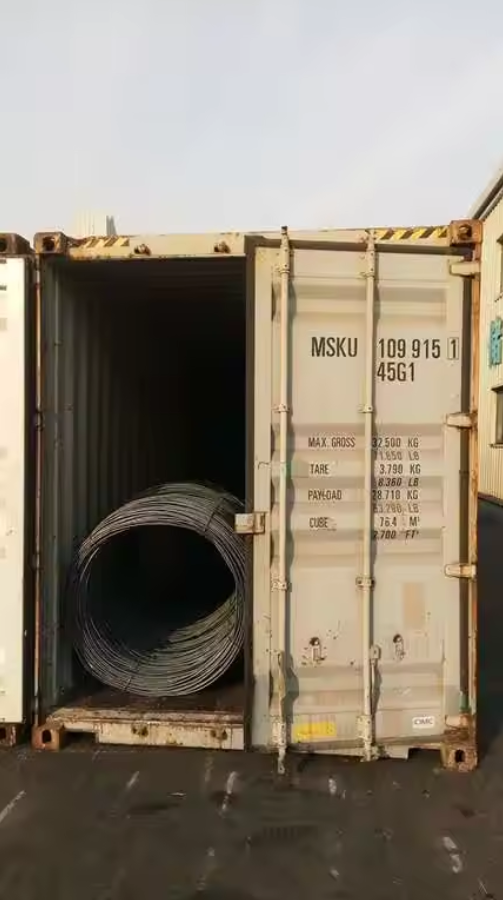
Ocean transit introduces severe humidity challenges. Crossing different climate zones causes heavy internal condensation. Moisture-proof packaging becomes non-negotiable here. Evaluate their export packaging standards closely. Poor packing invites devastating "white rust" during long oceanic voyages.
A secure packaging sequence typically includes the following critical steps:
Applying an inner plastic lining to block immediate air contact.
Adding protective PVC wrapping tightly coiled around the wire spools.
Securing outer hessian cloth or tough woven bags for physical abrasion protection.
Placing silica gel or high-capacity moisture-absorbing desiccants inside the shipping container.
Analyze their production capacity carefully. High-tonnage orders test manufacturer limits severely. Verify they can handle sudden volume spikes without extending delivery windows. Factory delays severely disrupt your concrete pouring schedules.
Align trade terms intelligently. Consider their Minimum Order Quantities (MOQ) closely. Ensure supplier flexibility perfectly matches your procurement cycles. Review your warehousing capacities honestly before accepting large bulk shipments.
Smart scalability requires excellent procurement strategy. Leverage a comprehensive primary steel manufacturer deeply. This streamlines global logistics seamlessly. It drastically reduces LCL (Less than Container Load) shipping costs. You maximize freight efficiency significantly when you bundle heavy materials.
Consider the immense logistical advantage of concrete and structural pairing. Source your Steel Rebar in tandem. You need binding wire immediately alongside rebar for concrete framework assembly. Ordering them together prevents mismatched delivery schedules completely.
Infrastructure and framing integration offers huge financial benefits. Combine orders intelligently. Procure Galvanized Round Steel Pipe and Steel Flat Bar from the exact same facility. This guarantees perfectly consistent zinc-coating quality across various structural elements.
Align structural procurement with your exterior cladding needs efficiently. Order PPGI Steel Coil simultaneously for roofing and paneling applications. This creates unified supply chain accountability. You only deal with one reliable vendor for all major structural components.
Buyers need a highly actionable framework. Follow these precise steps to finalize your supplier selection confidently.
First, mandate rigorous documentation upfront. Request recent ISO certifications immediately. Demand batch-specific Mill Test Certificates (MTCs). These documents prove actual chemical compositions. They verify mechanical strengths accurately before you spend money.
Establish strict sampling protocols next. Order trial spools immediately. Conduct localized bend tests yourself. Perform basic tension tests on-site. Execute thorough gauge verification before committing to bulk tonnage. Do not skip this critical trial phase under any circumstances.
Utilize independent facility audits finally. Hire third-party inspection services safely. SGS and similar global agencies provide excellent pre-shipment quality control. They verify loading conditions physically at the factory.
Audit Category | Verification Method | Target Benchmark |
|---|---|---|
Coating Weight | Chemical stripping / MTC review | Matches stated g/m² exactly |
Tensile Strength | Universal testing machine | Consistent within 350-500 N/mm² (typical) |
Packaging Integrity | Visual inspection before loading | Intact PVC, no exposed steel, dry container |
Choosing the right wire manufacturer represents a critical structural risk-management decision. It is never just a simple line-item expense. Your selection directly influences long-term construction integrity. Poor choices lead to catastrophic structural failures eventually.
Prioritize verified zinc coating weights always. Demand rigorous annealing processes routinely. Guarantee transit-secure packaging absolutely. These vital steps ensure your binding materials perform securely under severe project stresses.
Action-oriented next steps:
Audit your current vendors against strict ISO and MTC documentation requirements today.
Request detailed trial spools from new suppliers before signing high-tonnage contracts.
Calculate freight savings by bundling your wire orders alongside rebar or steel pipes.
Implement mandatory third-party pre-shipment inspections for all overseas bulk deliveries.
A: Builders typically utilize gauges ranging from BWG16 through BWG22. BWG20 serves as the most common standard for tying concrete rebar globally. It provides an ideal mechanical balance. It offers sufficient tensile strength for secure holds while maintaining necessary flexibility. This specific softness prevents excessive worker fatigue during rapid manual twisting on site.
A: Lifespan correlates directly to the zinc coating weight, measured in g/m². Hot-dipped variants possess a thick metallurgical bond. They can easily last several decades outdoors under extremely harsh conditions. Electro-galvanized options feature much thinner coatings. We highly recommend electro-galvanized strictly for shorter-term projects or fully protected indoor exposure.
A: You must request several essential documents to verify quality accurately. Always ask for batch-specific Mill Test Certificates (MTC). These confirm exact tensile strength and elongation properties. Furthermore, demand precise zinc coating verification reports. Finally, require valid ISO 9001 compliance records to ensure consistent, highly regulated manufacturing protocols.
A: Yes, comprehensive steel manufacturers typically allow mixed-container shipping. You can easily consolidate your wire alongside heavy items like rebar, flat bars, and steel pipes. This bundling strategy optimizes freight costs significantly. It drastically reduces Less than Container Load (LCL) expenses while streamlining your overall supply chain management beautifully.