Views: 269 Author: Site Editor Publish Time: 2026-06-04 Origin: Site


Industrial platforms require flooring solutions where failure is absolutely not an option. Worker safety, facility uptime, and strict regulatory compliance depend heavily on accurate grating specification. You must look beyond basic dimensions to build a truly reliable floor. It requires aligning material properties, detailed load tables, and secure fastening methods with your site-specific operational stresses. Simply guessing capacity often leads to premature wear, structural buckling, or catastrophic failure during heavy operations. This guide breaks down the critical technical evaluation criteria you need to master. We explore the structural specifications, environmental considerations, and practical installation realities required to specify these heavy-duty floors securely. You will learn how to navigate complex compliance frameworks, evaluate manufacturing types, and choose the exact configuration your demanding industrial environment requires.
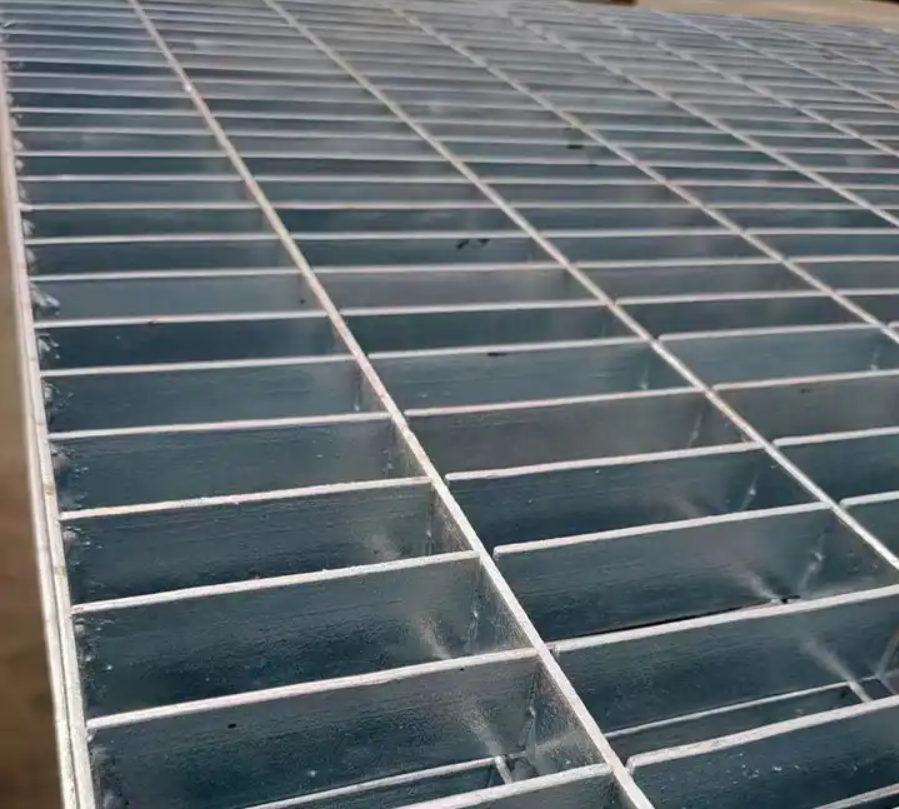
Specification Compliance: Exacting steel bar grating specifications (governed by NAAMM/ANSI standards) dictate load-bearing capacity and maximum unsupported spans.
Material Alignment: Selecting between bare carbon, galvanized, and stainless steel involves calculating upfront costs against chemical and environmental lifecycle risks.
Structural Integration: Safe installation requires matching the fastening method (saddle clips vs. welding) to the underlying Steel Structure and vibration profile.
Safety Factors: Anti-slip profiles and proper cross-bar spacing are critical for OSHA compliance and mitigating workplace hazards.
Understanding the fundamental structural anatomy of grating helps you frame complex business problems. A standard panel consists of two main elements forming an open, rigid grid. The primary vertical load falls on the bearing bars. Manufacturers typically use a highly durable Flat Bar for this central purpose. They align these bearing bars in parallel rows. Cross bars run perpendicularly across them, interlocking the grid. The cross bars do not support the primary downward weight. Instead, they provide essential lateral stability to the entire panel, preventing the bearing bars from buckling or twisting under pressure.
You must also carefully consider edge banding. Heavy rolling loads frequently stress the open, vulnerable edges of a grating panel. To solve this, fabrication facilities weld a sturdy Steel Plate or a robust Steel Angle along the perimeter. This banding process ties all the bearing bars together at their ends. It effectively redistributes impact forces and prevents edge deformation under severe operational stress.
A correctly specified grid achieves multiple structural success criteria simultaneously. It maximizes the overall strength-to-weight ratio, meaning you get massive load support without overburdening your support beams. It also maintains optimal open areas. You need these calculated gaps for rapid liquid drainage, hazardous gas ventilation, and natural light penetration down to lower facility levels.

Engineers rely on established industry standards to ensure absolute safety on elevated platforms. The National Association of Architectural Metal Manufacturers (NAAMM) publishes the authoritative MBG 531 guidelines. You should treat this document as your baseline engineering bible. It outlines the critical steel bar grating specifications for manufacturing tolerances, physical testing procedures, and acceptable performance limits. Decoding these NAAMM standards helps you verify structural limitations long before you issue a purchase order.
You evaluate load capacity using two entirely different frameworks. Uniform loads represent pedestrian foot traffic, static material storage, or light equipment spread evenly across the panel. We measure this in pounds per square foot (psf). Concentrated loads simulate heavy-duty vehicular impacts and dynamic point loads. Think of a heavy forklift wheel or a concentrated equipment base resting on a very small footprint. We measure this in pure pounds (lbs). You must always calculate your specifications based on the most extreme concentrated load expected on the platform.
Bending under heavy weight is a normal physical response, but excessive deflection causes major structural problems. Engineering standards typically cap maximum deflection at 1/4 inch (or L/120 of the span) for standard applications. Why does this matter? Going beyond this limit creates severe structural integrity risks over time, leading to metal fatigue. Furthermore, noticeable deflection makes pedestrians feel extremely unsafe. A bouncy floor disrupts workflow and decreases worker confidence.
Following a strict evaluation framework prevents costly mistakes. Use this simple numbered sequence when specifying loads:
Determine the maximum clear span between your primary structural supports.
Identify the absolute heaviest load (uniform or concentrated) the platform will ever endure.
Consult NAAMM-certified load tables to find a bearing bar depth capable of supporting that load safely.
Verify the anticipated deflection stays strictly under the 1/4-inch threshold.
The span represents the open, unsupported distance between structural steel beams. The bearing bar thickness and depth directly dictate this maximum unsupported span. If you increase the span distance, you must increase the bar depth proportionately. We provided a simplified reference table below to demonstrate this relationship.
Bearing Bar Size (Depth x Thickness) | Max Pedestrian Span (Clear Span) | Max Heavy-Duty Vehicular Span |
|---|---|---|
1" x 3/16" | 5' 5" | Not Recommended |
1-1/4" x 3/16" | 6' 7" | Not Recommended |
1-1/2" x 3/16" | 7' 6" | 1' 9" |
2" x 1/4" | 9' 4" | 3' 0" |
2-1/2" x 5/16" (Heavy Duty) | 11' 0" | 4' 6" |
Material selection directly dictates platform longevity. You must carefully weigh environmental exposure against chemical risks when choosing your base metal and finish.
Standard carbon steel remains highly cost-effective and structurally robust. We frequently recommend it for indoor, climate-controlled industrial platforms. However, bare carbon rusts rapidly when exposed to moist air. It requires a high-quality secondary coating, such as industrial paint or powder coating, to achieve any meaningful longevity.
Hot-dip galvanized steel serves as the definitive industry standard for outdoor environments. Following fabrication, factories dip the steel panels into molten zinc. The resulting zinc bath provides a tough, sacrificial layer that actively fights rust. Common Mistake: Always account for slight dimensional changes when specifying galvanized materials. The hot-dip process adds a thin layer of zinc, which slightly alters final panel tolerances and can impact tight clearances.
Stainless steel (specifically 304 or 316L grades) demands a significantly higher upfront investment. Yet, certain specialized industries absolutely require it. Food processing facilities, pharmaceutical labs, and petrochemical plants rely heavily on stainless steel. It survives aggressive chemical washdowns and heavy chloride exposure without degrading or pitting.
Finally, you must consider surface profiles carefully to conduct a proper slip-resistance risk assessment. Plain, smooth surfaces suit dry, highly controlled environments. Serrated edges become mandatory when you assess high slip risks. Specify serrated bearing bars for platforms constantly prone to oil, water, or industrial chemical spills. OSHA inspectors frequently look for adequate slip resistance on elevated walkways, and serrated profiles mitigate these workplace hazards efficiently.
How the factory physically joins the grid matters immensely to your final application. You must match the manufacturing style to your operational demands.
Welded bar grating remains the undisputed top choice for heavy industry. Facilities deploy this highly durable industrial steel grating across catwalks, loading docks, and heavy equipment platforms. Manufacturers use an intense automated forge-welding process. They apply massive electrical current and extreme hydraulic pressure simultaneously. This fuses the cross bars directly into the bearing bars. These permanently welded joints deliver maximum structural strength. They handle heavy rolling forklift loads and continuous, intense plant vibration flawlessly.
Press-locked grating uses a completely different fabrication technique. Machinery interlocks deeply slotted bearing and cross bars under extreme mechanical pressure. The resulting panel looks incredibly clean, flush, and highly uniform. However, we reserve this specific style for distinct scenarios. It works best for architectural applications, commercial buildings, or areas where lateral flexibility acts as a design constraint rather than a load hazard.
Evaluation Rule: Always choose forge-welded grating for high-impact, rugged industrial zones subject to dynamic forces. Reserve press-locked styles for highly specified pedestrian walkways, commercial facades, or aesthetic visual barriers where heavy vehicular impact is impossible.
Even the strongest, most expensive panel fails rapidly if improperly installed. Implementation realities require precise contractor oversight and adherence to proven fastening standards.
Clearance and standard tolerances matter greatly during field layout. You cannot jam grating panels tightly against surrounding steel supports or adjacent panels. We require standard deduction gaps (typically 1/4 inch between panels) to accommodate thermal expansion. A seamless, properly spaced drop-in fit onto the primary Steel Structure prevents panels from buckling upward during high summer heat.
Welding panels directly to the underlying structural supports creates the most rigid floor possible. It works exceptionally well for high-vibration equipment platforms where mechanical fasteners might rattle loose over time.
Risk: Welding burns away the protective galvanized finish at the connection point. Contractors must immediately apply a cold-galvanizing repair spray (zinc-rich paint) over the weld. Failing to restore this rust protection invites rapid corrosion at the most critical structural junctions.
Many elevated platforms require regular maintenance access below the deck. Mechanical fasteners make non-destructive panel removal possible. Saddle clips clamp down over the bearing bars, securing the panel to the flange of the support beam.
Best Practice: Industry standards strictly mandate a minimum of four saddle clips per standard-sized panel. Install them securely at the structural support points near the corners. Use more clips for panels exposed to heavy, dynamic movement or exceptionally long spans.
Field modification introduces severe structural risks. Sometimes contractors cut grating on-site to fit around pipes or structural columns. This action cuts away the engineered structural edge banding. Cutting on-site requires immediate re-banding of the newly opened edges to restore load transfer capabilities. You must also re-apply protective coatings instantly. Ignoring these steps leads directly to localized structural failure, rapid rust propagation, and inevitable safety citations.
Properly specified steel grating bridges the critical gap between daily worker safety and overall facility longevity. You simply cannot afford shortcuts or guesswork when dealing with elevated industrial platforms. Every variable plays a vital role in preventing catastrophic failure.
Base your initial procurement conversations on three hard metrics:
Define your specific load requirements clearly (distinguishing between pedestrian traffic and heavy forklift impact).
Accurately assess the environmental corrosivity of your facility to choose the correct material finish.
Measure the exact span of your existing structural supports to determine the required bearing bar depth.
Consult with a qualified structural engineer as your immediate next step. Ask them to verify the manufacturer's load tables against your actual site layout. Always request a comprehensive technical spec sheet and a physical material sample. Conducting thorough site-specific compliance reviews ensures your platform performs safely and reliably for decades.
A: The most common standard is 1-3/16 inches center-to-center. The industry widely refers to this as 19-space grating. This configuration provides an ideal balance of open area and structural rigidity. It easily supports typical pedestrian traffic while allowing water, debris, and light to pass through efficiently without creating trip hazards.
A: We strongly advise against ad-hoc field repairs. Welding a loose flat bar into a damaged panel compromises the engineered load capacity. It introduces unpredictable stress points and voids manufacturer warranties. Always replace damaged sections with new, certified engineered panels to ensure strict OSHA compliance and maintain a safe environment.
A: Industry standards require an absolute minimum of four saddle clips for a standard-sized panel (typically 3 feet by 24 feet). You should install these fasteners near the corners, attaching them directly to the underlying supports. For longer spans, add extra clips every four feet along the intermediate support beams.
A: Heavy-duty grating utilizes significantly thicker and deeper bearing bars. Factories typically construct them using robust 1/4-inch or 3/8-inch thick bars. While standard grating handles pedestrian loads safely, heavy-duty options are explicitly engineered to survive vehicular traffic, forklifts, and heavy equipment loads that would instantly crush standard pedestrian panels.