Views: 240 Author: Site Editor Publish Time: 2026-06-25 Origin: Site


Securing reliable structural steel components acts as a critical risk-management exercise for any commercial build. Component failure or delivery delays in commercial framing and roofing projects quickly cascade into costly downtime. A sudden shortage halts progress entirely, leaving crews idle. Sourcing a high-quality structural profile requires looking past surface-level pricing models. Procurement teams must evaluate specific mill capabilities, tight dimensional tolerances, and verifiable corrosion-resistance standards. You need materials engineered to endure harsh environments without early degradation. This comprehensive guide provides structural engineers and procurement teams an evidence-based framework for evaluating C-section and U-channel profiles. It will help you mitigate severe supply chain risks and confidently shortlist verified suppliers. Read on to build a resilient material sourcing strategy.
Profile Distinction: C-section channels (purlins) offer superior structural support for roofing, while U-channels provide versatile framing and bracing utility; both require exact gauge matching for project viability.
Coating Verification: Demand verifiable zinc-coating weights (e.g., G60, G90) and Hot-Dip Galvanized (HDG) compliance over generic "rust-proof" claims.
Supplier Vetting: A qualified supplier must provide transparent Mill Test Certificates (MTCs), clear Minimum Order Quantities (MOQs), and robust logistics for heavy freight handling (e.g., 25-foot custom lengths).
Integrated Sourcing: Consolidating procurement of channel steel alongside complementary components (beams, angles, pipes) can streamline logistics and lower bulk freight costs.
Substandard steel profiles lead directly to compromised load-bearing capacity. When manufacturers use inferior steel grades, the metal simply cannot support specified live loads. Premature structural degradation soon follows. You might notice early deflection in roof structures. Eventually, project managers face failed safety inspections. Inspectors will halt construction immediately upon spotting substandard materials. You cannot afford to cut corners on primary framing materials. Doing so jeopardizes the entire project timeline. It also exposes your firm to significant liability.
Inconsistent channel dimensions stall your installation teams. When profiles lack uniform thickness, workers struggle to align them. Poor galvanization results in rapid oxidation. Exposed roofing environments accelerate this decay dramatically. Reworking these specific errors drains your project budget quickly. The Cost of Poor Quality (COPQ) multiplies when you must replace installed materials. Replacing defective purlins on a completed roof is a logistical nightmare.
A successful procurement cycle secures verified steel grades. It delivers precisely slit and roll-formed profiles. You also need predictable delivery schedules aligning perfectly alongside your construction phases. Achieving this requires strict vetting. You must partner with mills capable of proving their metallurgical data. Reliable suppliers prevent costly bottlenecks before they occur.
Choosing the correct Galvanized Steel Channel requires understanding structural geometry. Different shapes serve distinct engineering functions on the job site.
This profile features unique inward-facing lips. These lips create increased structural rigidity under heavy loads. They prevent the flanges from buckling under compression. Engineers consider it ideal for roof purlins and wall girts. It handles structural spans requiring high load distribution exceptionally well. The enclosed shape offers high torsional strength. This makes it a staple in industrial roofing assemblies.
This presents a basic U-shape entirely without lips. It offers a lower overall profile and ensures ease of attachment. Installers find it best suited for architectural framing. They also use it extensively for equipment supports and track systems. It serves well for non-load-bearing architectural trims. The open design allows easy access for bolting. It provides incredible versatility for interior structural bracing.
Assess your exact span requirements, weight limits, and connection types carefully. You must evaluate welding versus bolting. Slotted channels also dictate your choice between C and U configurations. The chart below outlines the key selection criteria to guide your engineering choices.
Evaluation Criteria | C-Section (Purlin) | U-Channel |
|---|---|---|
Structural Rigidity | High (Due to stiffening lips) | Moderate |
Primary Application | Roofing, wall girts, heavy load spans | Equipment supports, architectural framing |
Torsional Resistance | Excellent resistance to twisting | Prone to twisting under high loads |
Installation Ease | Requires precise alignment for purlin cleats | Easy access for standard bolting/welding |
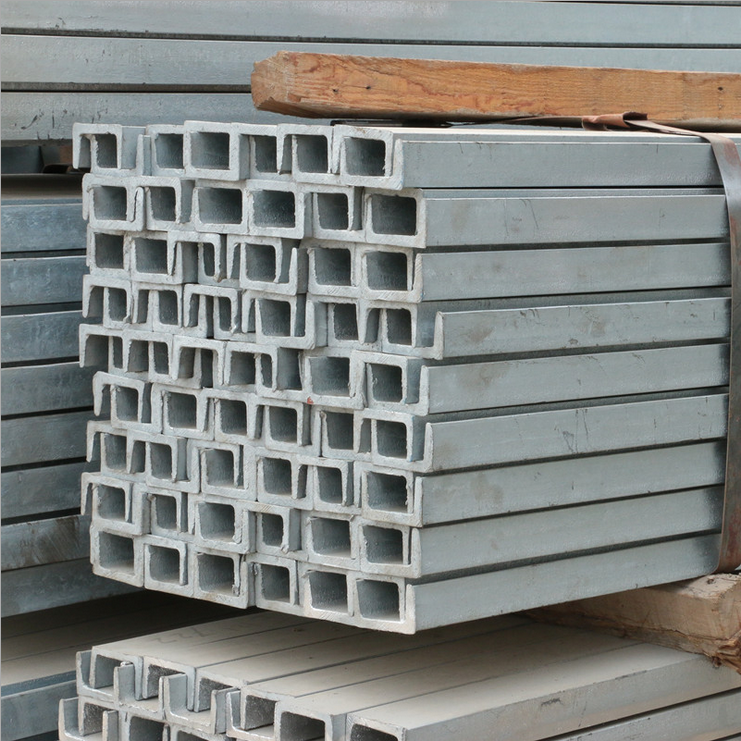
Specify required tensile strength strictly based on your structural engineering blueprints. Common standards include ASTM A36 or A572. Avoid suppliers unable to verify these crucial yield parameters. They expose your project to catastrophic structural failure. High-tensile steel resists bending forces effectively. It ensures your building frame remains intact during extreme weather events. You must demand material certifications upfront.
Distinguish clearly between pre-galvanized and hot-dip galvanized methods. Pre-galvanized steel gets mill-coated before roll-forming. This process leaves bare edges where the steel is cut. Hot-dip galvanized (HDG) steel is dipped entirely after fabrication. This ensures complete, impenetrable edge protection. Establish your necessary zinc coating weight carefully. Specify G60 for interior or mild exposure. Demand G90 or higher for harsh exterior environments. Coastal projects often require even heavier zinc application to prevent salt corrosion.
Verify specific supplier capabilities for exact gauge thickness. Common requirements include 12ga or 14ga profiles. You should also check custom length cutting options. Standard lengths often run 20 feet. Custom 25-foot lengths minimize on-site modification. This saves valuable installation time. Look out for dimensional drift during large production runs. A variance of even a few millimeters creates massive alignment issues down the line.
Procurement teams often negotiate much better freight terms. They achieve this by sourcing related structural members together. Using a single, high-capacity mill reduces logistical friction significantly. Consolidating your material orders minimizes shipping complexities. It also ensures consistent metallurgical quality across your entire framework.
Heavy foundation spans demand robust support. Primary load-bearing columns rely heavily on H Beam Steel. You need it where standard channel profiles prove structurally insufficient. These heavy-duty sections carry the main vertical loads of commercial structures.
Fabricators view Steel Angle Bar as absolutely essential. It provides vital cross-bracing and sturdy corner framing. It effectively reinforces critical intersections joining C and U channels together. Angle bars prevent lateral sway in high-wind zones.
Installers frequently utilize Steel Flat Bar on the job. They use it extensively for secure base plates. It also creates custom structural ties and specialized bracket fabrications alongside main channel runs. Flat bars offer immense fabrication flexibility on-site.
Industrial builds source Galvanized Steel Pipe concurrently. Contractors use it daily for structural scaffolding systems. It also serves exceptionally well for heavy fluid transport and secondary vertical columns. Procuring it together with your channels guarantees a unified delivery schedule.
White rust easily forms during transit. Improperly packed galvanized steel degrades quickly when exposed to moisture. This powdery zinc hydroxide compromises the protective coating. You must demand proper dunnage and secure strapping. Insist upon adequate moisture barriers inside shipping containers. Wood dunnage must remain completely dry. Wet timber placed against steel accelerates white rust formation dramatically.
Extra-long profiles exceeding 20 feet require specialized flatbed transport. Standard enclosed trailers simply cannot accommodate them. Verify your supplier operates a highly capable logistics network. It must accommodate your specific site offloading limitations. Urban construction sites often face severe crane positioning constraints. Your supplier must coordinate delivery times meticulously to match your site readiness.
Always evaluate the supplier's true production capacity. Compare this directly against their minimum order quantities (MOQs). Ensure they can meet prototype low-volume runs for initial testing. Confirm they can also handle full-scale rollout demands seamlessly. A supplier might produce excellent samples but fail during mass production. You need a partner capable of scaling up without dropping dimensional accuracy.
Make Mill Test Certificates (MTCs) a strict, non-negotiable requirement. They verify essential chemical composition thoroughly. They also confirm physical properties accurately. Without an MTC, you are essentially guessing the steel's grade. Do not accept generic testing documents. The MTC must correspond exactly to your specific batch number.
Prioritize suppliers holding active ISO 9001 certifications. They must demonstrate strict adherence to international structural codes. Acceptable standards include ASTM, EN, or JIS frameworks. ISO 9001 ensures the factory follows standardized quality management systems. It proves they audit their own extrusion and galvanizing processes regularly.
Submitting a rigorous Request for Quote (RFQ) requires precision. Follow these specific steps to draft a foolproof RFQ document:
Explicitly list the exact profile type you require (C-section or U-channel).
Detail exact dimensions including web depth, flange width, lip size, gauge thickness, and total length.
Specify any required hole-punching or custom slotting patterns clearly.
Define your necessary zinc coating weight (e.g., G60 or G90) precisely based on environment.
State all desired delivery terms using standardized Incoterms to avoid freight disputes.
Procuring galvanized C-section and U-channel steel is never just a commodity transaction. It represents a foundational structural investment requiring strict oversight.
Move beyond simple aggregate pricing models. Cheap steel often hides expensive installation delays and premature corrosion issues.
Base your final supplier selection entirely on verifiable metallurgical data and Mill Test Certificates.
Demand precision roll-forming capabilities to ensure dimensional consistency across massive order volumes.
Ensure your chosen partner demonstrates a proven track record of reliable commercial freight delivery.
A: Standard roof purlins typically require a G60 or G90 zinc coating. G60 provides adequate protection for interior or mild environments. G90 offers a thicker zinc layer, making it essential for harsh exterior exposure. Your specific environmental conditions and local building codes dictate the exact coating requirement.
A: Generally, you cannot substitute them safely for primary structural loads. U-channels lack the stiffening lips found on C-channels. This missing feature significantly reduces their load-bearing capacity. Consequently, U-channels typically cannot span the same long distances without experiencing severe deflection. Always consult a structural engineer before substituting profiles.
A: Yes, reputable B2B suppliers readily offer custom slotting and pre-punching services. Ordering pre-punched materials dramatically reduces your on-site labor costs. It also ensures precise, uniform alignment during installation. Be sure to specify your exact hole patterns and spacing requirements during the Request for Quote process.
A: You must always request certified Mill Test Certificates (MTCs). These documents verify the specific chemical composition and yield strength of your steel. Additionally, request third-party inspection reports and proof of ISO 9001 compliance. This documentation ensures your materials meet strict international structural standards like ASTM or EN.