Views: 240 Author: Site Editor Publish Time: 2026-06-22 Origin: Site


Sourcing structural steel requires balancing upfront procurement against long-term liability. Specifying the right L-shaped profile is only half the equation. The reliability of the metallurgical bond determines structural lifespan. Procurement teams and project engineers need verifiable data. They must distinguish between cosmetic zinc coatings and true structural-grade galvanized protection for harsh environments. We provide a strict evaluation framework for sourcing a reliable Galvanized Steel Angle Bar. You will learn how to verify compliance standards, evaluate material integration, and apply strict supplier vetting criteria. This guide ensures your next procurement cycle prioritizes metallurgical integrity and structural resilience.
Process Dictates Lifespan: True hot-dip galvanizing (HDG) provides a dual-protection mechanism (physical + sacrificial anode) unmatched by cold-dip (electrogalvanizing) alternatives.
Geometry Meets Load: Unequal angles can deliver up to a 20% higher strength-to-weight ratio for asymmetric load-bearing applications compared to standard equal angles.
Standardization is Non-Negotiable: Base materials must meet structural benchmarks (e.g., ASTM A36) while zinc coatings must align with rigorous adherence to ASTM A123 or ISO equivalents (minimum 86 microns).
Logistics Impact Integrity: A reliable manufacturer engineers their packaging (e.g., 7-slat reinforced bundling) to prevent mechanical damage to the zinc layer during maritime transit.
Engineers must understand the underlying coating technology to guarantee structural safety. Not all zinc coatings provide the same level of environmental resistance. We separate these technologies into two distinct categories: Hot-Dip Galvanizing (HDG) and Cold-Dip Galvanizing.
Hot-Dip Galvanizing involves submerging raw steel into a bath of molten zinc at roughly 500℃. This extreme heat creates a thick, alloyed bond. The zinc does not just sit on the surface. It diffuses into the steel substrate, creating tightly bonded metallurgical layers. Cold-Dip Galvanizing relies on electrochemical deposition. Manufacturers use it primarily for minor cosmetic repairs. It deposits a very thin zinc layer. This layer flakes easily under mechanical stress.
True HDG provides a dual-protection mechanism. First, the zinc acts as a physical barrier against moisture and oxygen. Second, it functions as a "sacrificial anode." Zinc is more electromagnetically active than steel. If a technician scratches the surface during installation, the surrounding zinc will corrode first. It actively protects the exposed steel from rust.
You must also specify the correct profile geometry for your project loads:
Equal Angle: This profile features a symmetrical L-shape. It provides balanced load distribution. Builders use it extensively for transmission towers and standard framing.
Unequal Angle: This L-shape features differing axis lengths. Engineers optimize it for specific directional stresses. It performs exceptionally well in constrained installation footprints.
Best Practice: Always conduct a visual verification of incoming material. Authentic HDG displays a distinct crystalline surface pattern known as "spangle." If the surface looks dull, painted, or perfectly uniform without crystalline shapes, you might be looking at a cold-dipped or painted substitute.
Structural protection strategies require a long-term perspective. Hot-dip galvanizing stands out as the most viable structural protection over a 20-to-50-year horizon. Specifying HDG effectively eliminates recurring paint and coating maintenance budgets. You install the material once, and it performs without continuous intervention.
Deployment zones dictate realistic environmental durability expectations. Local atmospheric conditions heavily influence the zinc degradation rate. We can project these lifespans using empirical data.
Deployment Environment | Corrosion Severity | Expected Maintenance-Free Lifespan |
|---|---|---|
Suburban / Rural | Low | 50+ Years |
Urban / Mild Industrial | Moderate | 30 - 40 Years |
Heavy Industrial / Coastal | High (Salt & Sulfur Exposure) | 20 - 25 Years |
Beyond weather resistance, the material offers exceptional mechanical toughness. The metallurgical bond between steel and zinc creates a highly resilient outer layer. The outer zinc layer is often harder than the base steel itself. This hardness resists abrasion during heavy-duty transport. It prevents critical coating failures during rough site installation.
HDG also delivers superior inspection efficiency. Project managers do not need complex lab analysis to verify coating integrity. Quality control teams can verify coating thickness rapidly on-site. They use simple, non-destructive magnetic thickness gauges. This streamlines site acceptance protocols and keeps construction schedules moving smoothly.
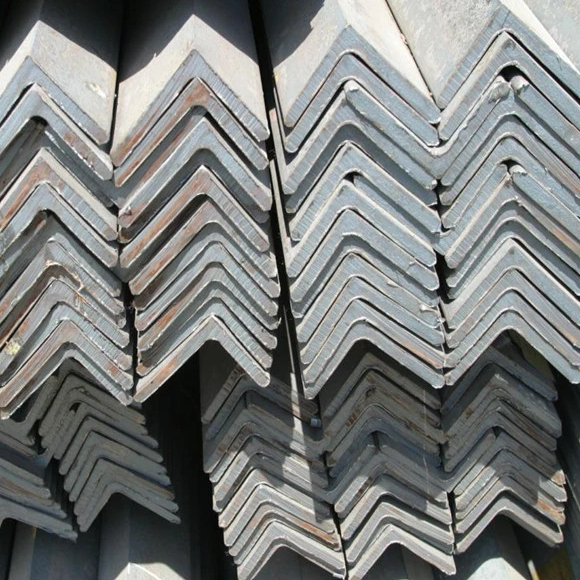
A reliable protective coating means nothing if the core material fails under load. You must establish a strong core material foundation. Suppliers typically use standard carbon steel for the base requirement. The most recognized benchmark is ASTM A36. Global equivalents include Q235B in China and S355 in Europe.
These grades guarantee baseline performance expectations. For instance, ASTM A36 delivers a minimum Yield Point of 36,000 psi. This ensures the angle can handle significant tensile and compressive forces before permanent deformation occurs.
Coating standards require equal scrutiny. You must emphasize the requirement for ASTM A123 compliance. This standard dictates specific zinc thickness thresholds based on the steel's material thickness. For heavy structural use, engineers typically target a minimum of 86 microns. Falling below this threshold drastically accelerates environmental degradation.
Many buyers confuse standard angle iron with structural angles. We define the "structural" threshold using a strict industry-standard dimensional cutoff. If the width or depth of the legs equals or exceeds 3 inches, the industry classifies it as a structural angle. Anything smaller falls into the light fabrication category.
Common Mistake: Fabricators often overlook safety warnings regarding machinability. While galvanized angles offer excellent corrosion resistance and good weldability, the heat from welding vaporizes the zinc coating. This releases toxic zinc oxide fumes. End-users must mandate proper local exhaust ventilation. Alternatively, operators should grind away the zinc coating around the weld zone prior to welding or thermal cutting.
Structural synergy defines modern construction. Galvanized angles rarely operate in isolation. They act as critical connecting tissues within broader steel frameworks. Understanding how to integrate them ensures overall structural stability.
In heavy load-bearing applications, engineers rely on angle brackets and clips. Installers use these precisely cut segments to secure primary H Beam Steel infrastructure. The angles bridge the 90-degree joints, transferring shear loads effectively across the main skeletal framework.
Secondary framing requires a different approach. Builders frequently combine angle irons with Steel Channel profiles and Steel Flat Bar components. This combination allows fabricators to construct custom HVAC mounts, industrial shelving, and utility cross-members. The flat bars provide tension support, while the channels handle horizontal bending moments. The angle bars tie everything together at the corners.
Exposed infrastructure demands uniform environmental protection. When building telecommunication towers or highway guardrails, you must integrate the angles directly with Galvanized Steel Pipe. Municipal lighting solutions also rely on this pairing. The pipe serves as the primary vertical mast. The galvanized angles form the mounting brackets and base supports. Matching the HDG finish across both components prevents galvanic corrosion between dissimilar metals.
Sourcing raw material solves only part of the supply chain equation. You must assess the supplier's capability to deliver value-added deep processing. Modern manufacturers provide precision laser cutting, plasma cutting, CNC hole punching, and bending. Crucially, they must perform these operations before the galvanization process. Cutting or drilling after galvanization leaves raw steel exposed to the elements, completely defeating the purpose of the zinc coating.
Quality Assurance (QA) protocols separate premium manufacturers from standard trading houses. You should look for partners offering comprehensive end-to-end testing.
Coating Thickness Testing: Verifying the 86-micron minimum using magnetic gauges.
Weight Tolerance Verification: Ensuring the steel meets theoretical weight charts without excessive negative tolerance.
Surface Defect Analysis: Checking for excessive zinc pooling, ash inclusions, or bare spots.
Top-tier suppliers gladly support third-party certifications. They facilitate inspections by recognized bodies like SGS or Bureau Veritas (BV) prior to shipment.
Finally, export packaging standards reveal a vendor's true experience level. Maritime transit subjects steel to high humidity, salt air, and severe mechanical shifting. We demystify standard shipping protocols to help you prove vendor competence. Ask for specifics. Look for container load optimization techniques, typically targeting 25-27 tons per TEU (Twenty-Foot Equivalent Unit). Demand heavy-duty steel strapping and protective plastic end caps. The absolute gold standard includes woven cloth wrapping coupled with 7-slat wooden reinforcements. This specific bundling method prevents transit friction and keeps the zinc layer pristine upon arrival.
Choosing the right structural supplier requires looking beyond simple theoretical weight charts. You must verify their metallurgical competence and ensure strict adherence to ASTM/ISO coating thicknesses. Robust logistics and export packaging are equally vital to prevent transit damage. A failing zinc layer compromises the entire structural framework long before the base steel reaches its stress limits.
Your next step is to formalize these requirements in your procurement documents. Advise your purchasing teams to request specific documentation during the RFQ process. Ask for mill test certificates, zinc coating thickness reports, and custom cut-to-size tolerances upfront. Contact our technical sales team today for project-specific sizing, deep processing requirements, and competitive volume pricing.
A: Typically 86 microns, adhering to ISO 1461 or ASTM A123 standards. This thickness provides reliable, long-term exterior exposure protection in most atmospheric conditions.
A: Yes. The standard A36 base metal welds very well. However, strict safety protocols are required to manage toxic zinc fumes. You often need local grinding to remove the zinc layer directly around the weld zone prior to thermal processing.
A: The primary difference is the dimension threshold. Legs measuring 3 inches or greater in width are generally classified as structural steel. These larger profiles are capable of bearing significantly heavier architectural loads.
A: By aligning the longer leg against the primary axis of the load, the profile provides targeted rigidity exactly where it is needed most. This asymmetric design can save up to 20% in overall material weight compared to symmetrical profiles.
A: Depending on the manufacturer's stock levels and your deep processing requirements, custom batch production typically requires 5 to 20 days post-deposit before the material is ready for maritime dispatch.