Views: 0 Author: Site Editor Publish Time: 2026-06-07 Origin: Site


Sourcing structural materials demands a careful balance. You must weigh upfront material expenses against long-term corrosion resistance and exact load-bearing requirements. Specifying the wrong steel grade, manufacturing process, or wall thickness creates severe cascading issues. It often leads to frustrating project delays. It generates excessive material waste during assembly. Worse, it risks premature structural failure when exposed to harsh industrial environments. We designed this comprehensive guide to give procurement teams and engineers a rigorous decision-making framework. You will learn how to evaluate Galvanized Square Steel Tube specifications effectively. We explore critical processing realities and mitigation strategies. We dissect the precise nuances between mechanical and structural grades. You will also discover how to evaluate supplier capabilities to reduce scrap. Ultimately, this article equips you to make precise, confident procurement decisions.
Application Thresholds: Mechanical and structural tubing are strictly defined by outer diameter (OD) and wall thickness (the 2-inch / 11ga rule of thumb).
Process Dictates Performance: Seamless, ERW (Electric-Resistant Welded), and DOM (Drawn-Over-Mandrel) each serve specific tolerance and pressure boundaries.
Hidden Costs in Processing: Factory-grade corrosion resistance is compromised during field modifications; mandatory post-cut cold galvanizing is required to maintain the 30-year protection lifecycle.
Supplier Value: Advanced suppliers reduce material scrap through nested-length yield calculations rather than standard stock-length dumping.
Engineers frequently face a strict sourcing dilemma. Over-specifying material grades drives up project costs needlessly. Conversely, under-specifying materials compromises structural integrity. Procurement teams must align ASTM standards with exact project tolerances. You need a clear baseline to differentiate mechanical tubing from structural tubing. Industry standards rely on a simple threshold. They measure outer diameter (OD) and wall thickness.
This grade serves heavy-duty construction perfectly. Structural tubes feature an outer diameter equal to or greater than 2 inches. Their wall thickness exceeds 11-gauge. The resulting performance is highly robust and reliable. Yield strength typically ranges from 46,000 to 50,000 psi. Engineers design A500 tubing specifically for static load-bearing applications. Common examples include highway supports, commercial frameworks, and heavy pedestrian bridges. They carry massive dead loads over long periods. You rely on them for core building stability.
Mechanical tubing serves a completely different engineering purpose. These tubes feature an outer diameter under 2 inches. The wall thickness stays at or below 11-gauge. Performance outcomes prioritize extreme precision. You get much tighter wall thickness tolerances. These usually hover around +/- 10%. They also boast higher yield strengths. Some mechanical grades can reach 74,000 psi or more. This makes them perfect for precision machinery. They also excel in commercial racking systems and dynamic equipment frames. They handle active vibration much better.
Feature | Mechanical Tubing (A513) | Structural Tubing (A500) |
|---|---|---|
Outer Diameter (OD) | Less than 2 inches | 2 inches or greater |
Wall Thickness | 11-gauge or thinner | Thicker than 11-gauge |
Yield Strength | Up to 74,000+ psi | 46,000 to 50,000 psi |
Primary Application | Dynamic machinery, precision racking | Static load-bearing, bridges, framing |
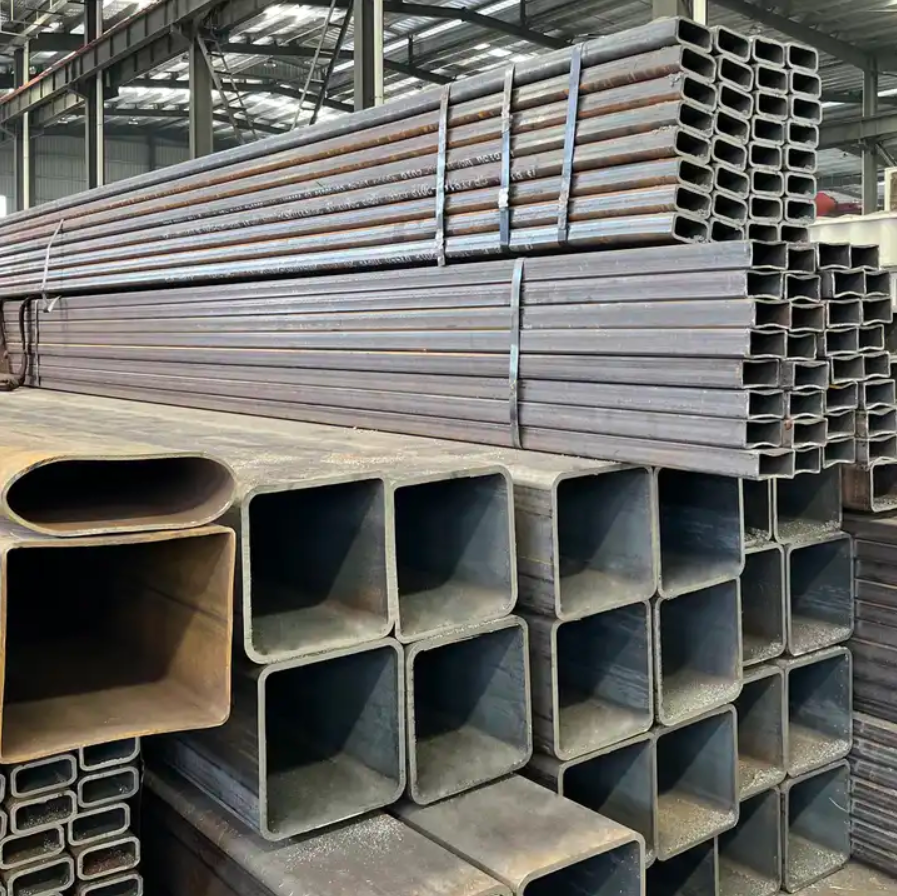
The base fabrication method dictates how a tube performs under stress. It also defines its dimensional accuracy. We generally recognize three core production methods. Each method serves distinct engineering parameters.
As-Welded / ERW (Electric-Resistant Welded): Manufacturers roll-form steel plates into a hollow shape. They fuse the seam using a high-frequency electrical current. This remains highly cost-effective. It works perfectly for standard construction. You use it where extreme internal pressure is not a factor.
Drawn-Over-Mandrel (DOM): This process radically refines ERW tubes. Factories pull the welded tube through an external die. They draw it over an internal mandrel simultaneously. This cold-working action removes the internal weld flash. It delivers a superior surface finish. It also guarantees tight tolerances for demanding mechanical applications.
Seamless: Factories extrude this tube directly from a solid steel billet. It contains absolutely no weld seam. You need seamless tubes for high-pressure systems. Aerospace environments also demand them exclusively. In these sectors, a weld-seam failure remains an unacceptable risk.
After fabrication, the steel needs robust corrosion protection. You can choose between two primary galvanizing techniques. Your choice depends entirely on the installation environment.
Hot-Dipped Galvanizing immerses the tube in molten zinc. The popular G90 standard is a prime example. It creates a thick, durable coating inside and out. We highly recommend this for corrosive outdoor environments. It easily yields up to 30 years of rust protection. Industrial facilities prefer it for longevity.
Electrogalvanized tubes offer a thinner, smoother coating. Electricity bonds zinc directly to the steel surface. This technique suits indoor applications best. It also works exceptionally well when components need high aesthetic finishes before final painting.
Best Practice: Always request Material Test Reports (MTRs) from your mill. They verify the exact zinc coating thickness. They also confirm the chemical composition of the base steel.
A complete structural project rarely relies on just one profile. You must assess material compatibility early in the design phase. You need to know how the core framework interfaces alongside other structural shapes. Proper integration guarantees structural longevity.
Square and rectangular tubes provide an excellent strength-to-weight ratio. They owe this entirely to their uniform, orthogonal geometry. This geometry resists torsional twisting far better than open profiles. This cross-sectional synergy allows for seamless integration across various building systems.
Complementary Supports: You often combine square tubing alongside Steel Channel. You might also use Steel Angle Bar for critical connections. They provide essential cross-bracing. They work perfectly for lintels and specialized load distribution points.
Fluid and Wiring Pathways: Many designs require internal protective routing. You can easily integrate Galvanized Round Steel Pipe into the design. These pipes act as sturdy exterior handrails. They also serve as internal conduit systems running through the main square-tube framework.
Modern construction often involves complete facility enclosures. You must frame the primary structural tubes alongside exterior cladding materials. Many builders source cladding derived from PPGI Steel Coil (Pre-Painted Galvanized Iron). Matching these components ensures unified corrosion resistance. The entire building envelope stays protected against severe environmental degradation. It also creates a cohesive visual aesthetic for the facility.
Field fabrication introduces significant structural and safety variables. Any thermal or mechanical alteration compromises the original factory finish. You must manage these variables carefully. Ignoring them leads to rapid material degradation.
Factory galvanizing provides a continuous protective shell. Cutting the tube breaks this shell instantly. Welding superheats the surrounding area. This destroys the localized zinc layer. You must anticipate these processing realities during the procurement phase. Do not assume the factory finish survives heavy field modification.
Heating or welding galvanized coatings poses immediate health risks. High temperatures release volatile zinc oxides into the air. Inhaling these fumes causes severe respiratory distress known as zinc fume fever. Strict safety protocols remain non-negotiable. You must implement localized exhaust ventilation. Workers require specialized respiratory protection. Never weld galvanized steel in confined, unventilated spaces. Safety managers must strictly enforce these guidelines.
Fabrication directly impacts the protective zinc layer. Sawing, drilling, or welding strips the zinc away. This action exposes raw carbon steel to the elements. Moisture will begin attacking it immediately.
Mandatory Protocol: Procurement must formalize strict repair standards. You must mandate the use of high-zinc cold galvanizing compounds. Workers should apply these sprays immediately post-fabrication. They must coat all cut ends and weld seams. This simple step prevents premature oxidation. It fully restores the material's defense mechanisms.
Common Mistake: Leaving cut ends exposed for days before touch-ups. Oxidation begins within hours in humid environments. You must treat the metal the same day you cut it.
Evaluating a supplier requires looking far beyond simple unit pricing. A supplier’s operational capacity directly impacts your project timeline. It also affects your overall waste metrics. You need a supply partner, not just a transactional vendor.
Avoid suppliers who only sell fixed stock lengths. Standard stock-length dumping leaves you with massive piles of unusable offcuts. Instead, look for partners who carry variable inventory. They should offer lengths ranging continuously from 20ft to 60ft. Advanced suppliers utilize nested-length algorithms. They match your exact cut-list against their available inventory. This drastically minimizes material waste. It maximizes your overall structural yield.
Your supplier should provide access to niche products. Assess their ability to source "Prop Tubes." These represent large-scale custom rectangular piping used heavily in construction shoring. You might also need alternative materials like ASTM A847. This specific weathering steel develops a self-protecting rust patina. It requires no paint. It allows for thinner walls. It ultimately creates a much lighter overall structural weight.
Verify the supplier’s track record regarding dimensional consistency. Poor manufacturing tolerances lead to costly field re-work. Ensure they strictly adhere to wall thickness tolerances. Ask about their delivery fleet capabilities. Reliable logistics prevent cascading schedule delays on your job site.
Evaluation Category | What to Look For | Red Flags |
|---|---|---|
Inventory Flexibility | Variable lengths (20ft to 60ft), automated nesting capabilities. | Only sells rigid standard lengths (e.g., strictly 24ft). |
Product Range | Access to Prop Tubes, ASTM A847, and custom extrusion sizes. | Limited to basic A500 stock exclusively. |
Quality Control | Provides MTRs proactively. Strict adherence to +/- 10% wall tolerance. | Hesitant to share origin mill data or test reports. |
Selecting the right galvanized square and rectangular tubing requires careful analysis. You must look past surface-level pricing to evaluate true value. You should rigorously evaluate exact ASTM grades to prevent structural failure. You must choose between manufacturing methods like ERW and DOM based on specific performance needs. Furthermore, you must prepare for the realities of field fabrication and vital safety protocols.
Procurement and engineering teams should take immediate action. First, audit your current cut-lists against available nested supplier inventory. Second, review your shop floor safety gear for zinc welding compliance. Finally, formalize standard operating procedures for post-weld cold galvanizing. Taking these steps guarantees a safer, more efficient project execution.
A: Galvanized steel is highly cost-effective. It often provides similar structural strength and up to 30 years of corrosion resistance in non-extreme environments. It does this for a fraction of the cost of stainless steel. You should reserve stainless steel strictly for extreme chemical or food-grade reactivity requirements.
A: Use the industry baseline rule. If the outer diameter is over 2 inches and the wall is thicker than 11-gauge, structural A500 is the standard choice. Smaller, thinner, and highly precise applications demand mechanical A513 tubing.
A: Yes, you can utilize standard steel welding methods safely. However, the workspace must have industrial ventilation to extract volatile zinc fumes. Furthermore, you must properly treat the weld areas with cold galvanizing spray post-weld to restore corrosion resistance.
A: ASTM A847 is an unpainted, weathering steel alternative. Instead of a zinc coating, it develops a self-sealing oxidized patina over time. Engineers use it when minimal maintenance and high structural efficiency (thinner walls) are prioritized over the bright finish of galvanized steel.