Views: 0 Author: Site Editor Publish Time: 2026-06-12 Origin: Site


Sourcing industrial-grade prepainted steel coil requires navigating a complex matrix of zinc coating weights, paint resin types, and base metal grades. It demands precision far beyond just picking an attractive finish. You must understand the underlying chemistry and mechanical properties. For procurement managers and project engineers, substandard coil coatings lead to premature delamination, project delays, and inflated lifecycle costs. You know how quickly harsh environments degrade poor materials. Replacing damaged panels destroys construction margins and ruins your professional reputation. Evaluating a factory’s true capability goes beyond comparing headline prices on bulk orders. This guide deconstructs the technical specifications, manufacturing verifiable controls, and cost-to-performance models necessary to qualify a dependable PPGI manufacturer. We will show you exactly what separates premium production lines from high-risk suppliers. Read on to master these critical material standards and build a highly secure supply chain.
Lifecycle ROI: PPGI yields a 1.5x lifespan multiplier compared to bare galvanized steel due to its dual-barrier (zinc + resin) corrosion protection.
Specification Baselines: Industry-standard coils utilize a dual-spray, dual-bake process with top coats ranging from 10–35μm and zinc layers between 30–275 g/m².
Cost Drivers: Pricing is heavily influenced by zinc mass, paint quality (e.g., PVDF vs. PE), and color selection (standard RAL colors like Sky Blue are inherently more cost-effective).
Risk Mitigation: Verifiable 3-layer seaworthy packaging and strict adherence to 5-point factory quality control (QC) are non-negotiable for international supply chains.
Let us first clarify the exact nomenclature. PPGI stands for Pre-Painted Galvanized Iron. You buy it by the ton, but you apply it by the meter. Global steel index fluctuations dictate baseline costs heavily. These prices typically range between $400 and $1,200 per ton. Supply chain variables and raw material shortages often push these figures around. Smart buyers convert this bulk price into a precise per-kilogram landed cost. It helps them compare quotes accurately across different regions. We often see buyers confused by varying price lists. They look at raw ton prices and fail to account for paint quality differences. Understanding the baseline economics gives you strong negotiation leverage.
Next, let us contrast PPGI and PPGL objectively. PPGL uses a Galvalume or Aluzinc base instead of pure zinc. It commands a $0.10 to $0.20 per kilogram premium. Does your project face extreme marine salinity? If not, PPGI remains the most cost-effective standard. You get excellent protection without paying for unnecessary alloy upgrades. The standard zinc layer handles normal weathering perfectly.
Color choices also impact your final invoice significantly. Pigment availability drives specific costs. Factories optimize production lines for standard shades. RAL 5015 Sky Blue is a perfect example. Choosing it minimizes batch-changeover costs. You skip machine downtime and pigment recalibration. This simple choice delivers immediate procurement savings compared to custom-matched hues. We always advise starting with standard colors unless architectural mandates require exact custom matches.
Real protection comes from a specialized 3-layer architecture. We start with the zinc foundation. It provides essential corrosion resistance for your PPGI Prepainted Steel Coil. You must map the required zinc coating mass against expected environmental exposure. Specifications normally span from Z40 up to Z275 g/m². Higher zinc weight means longer survival in harsh weather environments.
Above the zinc sits the paint system stratification. We can deconstruct these functional layers easily. The primer paint serves as the crucial adhesion layer. Factories use polyurethane or epoxy formulations here. It prevents under-film corrosion from spreading if the top coat scratches. Without a high-quality primer, the entire paint system will eventually peel. The back paint covers the reverse side of the coil. It usually measures 7±2μm thick. Manufacturers apply epoxy or modified polyester. This layer protects the rear and aids foam adhesion for insulated sandwich panels.
Finally, you have the top paint. It ranges from 10 to 35μm. It delivers UV resistance and the final aesthetic finish. Let us compare common top coat resins.
Resin Type | Common Use Case | Key Performance Characteristic |
|---|---|---|
PE (Polyester) | Standard Construction | Highly cost-effective for normal climates |
SMP (Silicone Modified) | Weather-resistant Needs | Better color retention over extended time |
HDP (High-durable) | Severe Environments | Excellent UV and chalking resistance |
PVDF (Fluorocarbon) | Maximum Longevity | Ultimate protection for heavy industrial zones |
Verify factory claims carefully. Check their partnerships with top-tier paint suppliers. Names like Nippon and Akzo-Nobel confirm high manufacturing standards. Avoid generic resins when durability matters most. They often fade or chalk within a few short years of solar exposure.
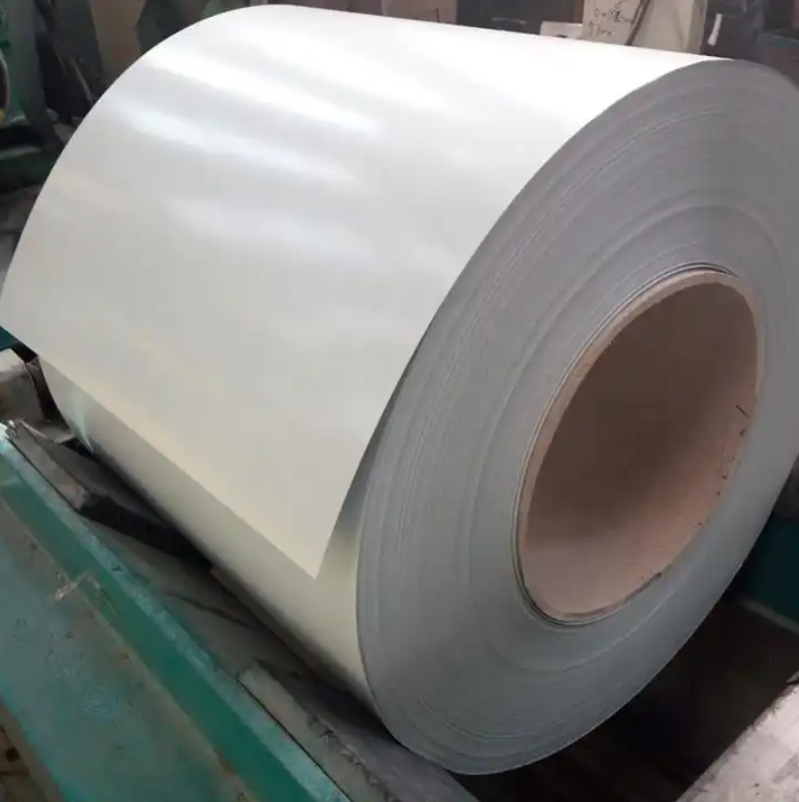
Top-tier factories rely on a continuous coil coating process. This 12-step method ensures finish integrity across thousands of meters. We call the benchmark technique "Double Spray, Double Bake." It guarantees maximum adhesion and smoothness. Here is the exact production reality you should look for:
Uncoil the raw steel from the master roll.
Splice the ends for continuous feeding without stopping the line.
Utilize an inlet looper to accumulate metal and maintain steady speed.
Degrease the surface thoroughly to remove rolling oils and dirt.
Apply the chemical conversion coating for enhanced primer bonding.
Apply the primer and back coating via precision rollers.
Enter the first baking oven to cure the base layers.
Cool the strip rapidly using advanced water quenching systems.
Apply the final top coat to exact micron specifications.
Enter the second baking oven for final resin cross-linking.
Cool the strip again and perform inline surface inspection.
Recoil the finished product securely for packaging.
Quality control is equally critical. You must demand physical lab reports before shipment. A qualified factory routinely runs these specific assessments. The T-Bend test verifies paint flexibility. It ensures the coating stays intact during downstream profiling. The Salt-Spray test simulates accelerated environmental corrosion inside a sealed chamber. Impact and tensile tests confirm base metal integrity. They usually check grades from DX51D through DX54D to ensure proper formability. Finally, they use a spectrophotometer for strict color matching. This ensures cross-batch consistency. It aligns the color with strict GSB05-1426-2001 or RAL standard frameworks. Consistent testing eliminates surprise defects upon delivery.
You must map coil specifications to your exact manufacturing outcomes. Different applications demand wildly different material profiles. You cannot use a standard roofing coil for a high-end washing machine.
Home Appliances: You need thin-gauge material here. A thickness of 0.15mm works well for tight bends. Specify a moderate zinc level like Z80. You also want high-gloss finishes for exterior casing applications. The paint must resist household chemicals and daily wear.
Industrial & Construction: These jobs require heavy-gauge metal to withstand wind loads. Push the zinc up to Z275 for maximum rust defense. Demand a PVDF coating. This combination delivers maximum exterior durability against severe UV radiation and acid rain.
Think about how these coils integrate into broader structural projects. They rarely exist in isolation. You will likely combine them with framing systems utilizing Galvanized Steel Pipe and Square Steel Tube. Structural decking often requires heavy Steel Plate for massive support loads. Perimeter security might rely on strong Galvanized Steel Wire to keep the facility safe.
Let us discuss hardness selection logic. Matching structural requirements to coil hardness is vital. You can choose soft, mid-hard, or full hard grades. If you pick the wrong one, the metal will crack during cold roll-forming. Soft grades bend easily for intricate profiles like standing seam roofs. Full hard grades offer superior load-bearing strength for simple corrugated sheets. Always align the hardness with your specific forming machinery to prevent costly material waste.
International shipping poses a massive threat to pristine coils. Saltwater and rough handling can ruin unprotected metal before it ever reaches your facility. A verified factory uses a strict 3-layer seaworthy defense system. This physical safeguard prevents transit damage completely.
Layer 1 consists of moisture-proof plastic film. It stops condensation tracking across the metal surface during extreme temperature shifts at sea. Layer 2 adds heavy-duty waterproof kraft paper. It provides a dense secondary moisture barrier against direct splashing. Layer 3 is outer galvanized steel armoring. Workers secure it tightly with high-tension packaging strips. They also apply sturdy edge and corner protectors. This stops impact damage during crane loading and forklift maneuvers. Without these protectors, the coil edges crimp, ruining the first few hundred meters of material.
You should also evaluate vendor operational maturity through their logistics capability. Can they handle complex trade terms? Look for capacity to manage FOB, CIF, or DDP shipments seamlessly. DDP, for instance, requires deep customs expertise. Reliable lead times show a well-managed production schedule. Standardizing your expectations helps build a predictable supply chain. You should expect 3 to 5 days for sampling. Bulk runs typically require 7 to 15 days. Factories hitting these targets consistently demonstrate strong internal controls. They reduce your supply chain risks dramatically and keep your project perfectly on schedule.
Identifying a reliable factory requires strict diligence. You must look for transparent technical specifications and verifiable processes. The "double-bake" coating technique ensures superior finish integrity. Strict lab data and robust maritime packaging are completely non-negotiable. These elements separate serious manufacturers from risky suppliers. Do not let flashy brochures distract you from core engineering requirements. Use the comparison models we discussed to evaluate every single quote. You hold the power to demand better accountability from your suppliers.
Your next step is straightforward. Contact your shortlisted vendors today. Request specific parameter sheets detailing thickness, zinc mass, and paint resin. You should also demand T-bend and salt-spray test samples. Test these samples physically before you commit to large pilot orders. This disciplined approach guarantees your project's success.
A: Industry-standard top coats range from 10 to 35 microns (μm). Back coats usually measure around 5–9 μm. Thicker PVDF coatings offer maximum UV and weather resistance. They are ideal for harsh outdoor environments where color retention is critical.
A: You simply divide the per-ton price by 1,000. Ensure the quote specifies the exact base metal grade. It must also list the zinc weight, like Z100, and the paint type. These factors dictate the accurate baseline price for your comparative calculations.
A: Factories optimize their production runs for standard RAL colors like blue or white. Custom colors require significant machine downtime. The factory must clean the line, formulate new pigments, and run precise color-matching tests. This results in higher minimum orders and slight per-ton premiums.
A: Always request standard laboratory documentation. You should ask for T-bend test results to verify paint flexibility. Also, demand MEK (Methyl Ethyl Ketone) solvent-rub test reports. These reports guarantee the paint is fully cured and will not delaminate during actual field use.