Views: 228 Author: Site Editor Publish Time: 2026-06-16 Origin: Site


Procuring structural steel for large-scale infrastructure or commercial builds requires balancing structural integrity, budget constraints, and supply chain reliability. High-stakes projects demand precise materials to ensure long-term stability and structural safety. For procurement managers and lead engineers, moving from evaluation to vendor selection means scrutinizing dimensional tolerances, material compliance, and export logistics. Delays or substandard steel can derail construction timelines and compromise on-site safety.
As a leading H Beam Steel supplier in China, this guide outlines the engineering economics, global compliance standards, and procurement criteria necessary to source reliable, heavy-duty structural beams for your next high-stakes project. We will explore structural advantages, processing capabilities, and the essential quality assurance steps you need.
Engineering Efficiency: Wide-flange H-beams offer superior strength-to-weight ratios compared to traditional I-beams, potentially reducing overall structural weight by 30–40% and cutting welding/splicing labor by up to 25%.
Global Compliance: Evaluation should hinge on verifiable standards (EN 10025, ASTM) and comprehensive traceability through Mill Test Certificates (EN 10204 3.1) and NDT reporting.
Custom Fabrication: Leading manufacturers provide deep processing—from precision cutting and drilling to hot-dip galvanizing designed to withstand extreme environments (>4800-hour salt spray resistance).
Integrated Procurement: Consolidating the purchase of H-beams with complementary structural materials streamlines logistics and reduces cross-border shipping complexities.
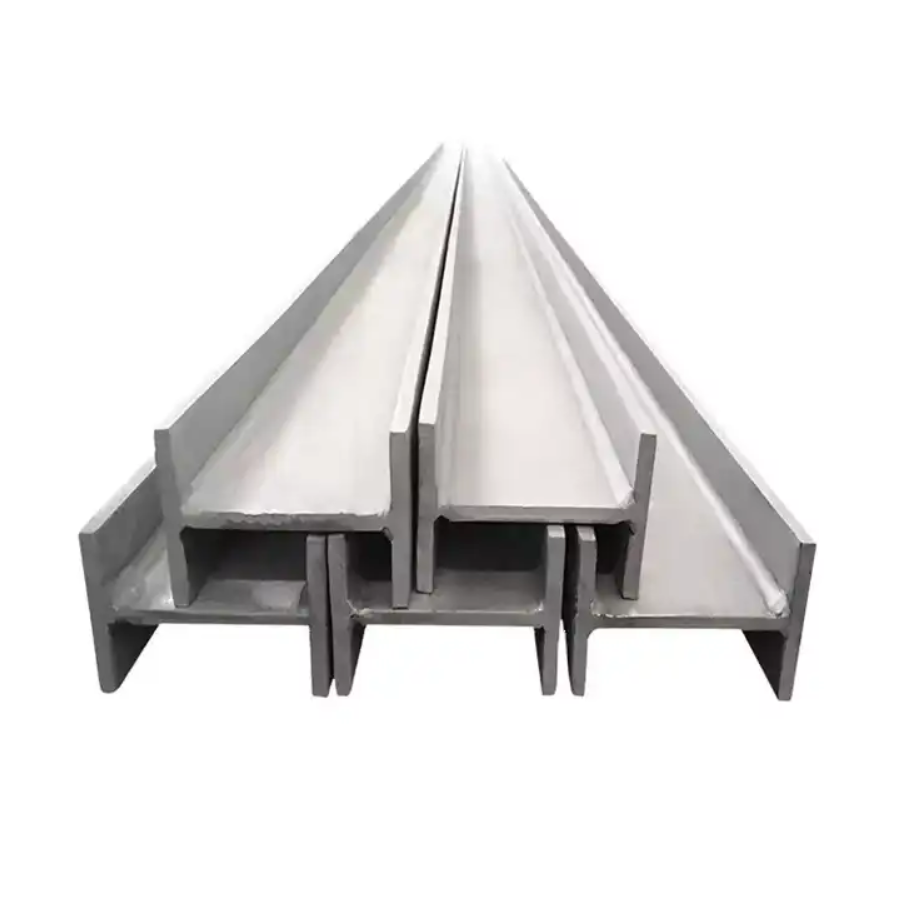
Engineers consistently evaluate cross-sectional profiles to maximize load distribution. The physical advantage of the H-beam geometry remains unmatched in heavy construction. You see wider, parallel flanges on these profiles. They combine with a highly reinforced web. This shape distributes immense weight efficiently across the entire axis. Standard I-beams use tapered flanges instead. They simply cannot match this balanced load distribution under extreme stress.
Optimized cross-sectional area allocation creates a much higher strength-to-weight ratio. This directly impacts project budgets. You save substantial money on raw materials. Industry baselines highlight these quantifiable cost reductions clearly.
Raw Material Savings: Utilizing optimized H-beams can save 15–20% in raw metal costs per project.
Labor Reduction: On-site riveting and welding workloads drop by roughly 25% due to straightforward parallel connections.
Weight Optimization: The superior load-bearing capacity often reduces overall structural weight by 30-40%.
Time is a critical currency in modern construction. You can erect modular steel structures surprisingly fast. They go up significantly faster than standard concrete frameworks. In practical field operations, utilizing pre-fabricated steel components effectively halves structural assembly times. This operational reality allows contractors to compress schedules and hit critical project milestones early.
International builds demand strict adherence to verifiable engineering parameters. European standard profiles base their metrics on the EN 10025 specification. Engineers use this framework to match exact structural specifications. Understanding these classifications prevents costly over-engineering.
We classify standardized profiles into three primary European designations:
HEA (Light): These feature thinner flanges and webs. They suit lighter structural frameworks perfectly.
HEB (Standard): These thicker profiles offer high load-bearing capacity. They effectively resist high bending moments and shear forces.
HEM (Heavy): These boast extra-thick flanges. They handle extreme load applications and massive vertical stress.
Profile Category | Flange-to-Web Ratio | Primary Application | Best Suited For |
|---|---|---|---|
Wide Flange (HW) | Flange width equals web height | Main structural columns | High-rise building frameworks |
Medium Flange (HM) | Flange width is slightly smaller | Load-bearing beams | Commercial roofing spans |
Narrow Flange (HN) | Flange width is noticeably smaller | Secondary framing | Lighter industrial sheds |
Manufacturing methods dictate the final capability of the beam. Hot-rolled variants come from universal mill production. They perform exceptionally well for standard commercial builds. Welded profiles serve a different purpose. They fit customized, non-standard spans perfectly. Some advanced welded structures can support spans up to 330 feet without intermediate support columns.
Corrosion slowly ruins unprotected structural steel. Harsh environments pose serious operational risks. Marine areas and chemical plants demand exceptional surface treatments. Moisture, salt, and acidic compounds degrade raw iron rapidly. Hot-dip galvanizing is an absolute necessity in these conditions. You should verify testing benchmarks before approving any vendor.
Look for comprehensive salt spray testing reports. Reliable treatments must pass >4800-hour salt spray tests. This rigorous benchmark ensures a 50+ year lifespan in aggressive environments. It eliminates future maintenance headaches for the asset owner.
Pre-fabrication capabilities matter just as much as surface protection. Sourcing pre-processed metal reduces downstream fabrication bottlenecks. It keeps your site assembly line moving smoothly. Evaluate your supplier based on their deep processing capabilities. A capable factory should execute custom cutting and precision CNC drilling natively. Priming and advanced welding are equally crucial. Submerged Arc Welding (SAW) provides exceptional joint strength. Utilizing these supplier services shifts complex labor off your site and into a controlled factory environment.
Fragmented supply chains cause inevitable shipping delays. Sourcing everything from one manufacturer simplifies project management. Vendor consolidation offers strong logistical advantages. It reduces fragmented cross-border shipping costs significantly. You also ensure unified material grading across the entire structural package.
You will always need complementary inventory to complete a build. Consolidating these materials ensures exact metallurgical compatibility. Let us review the essential additions required for a complete structural assembly.
Connection Elements: Gusset plates and base plates require high-strength materials. These structural connections tie your primary columns together safely. You need dependable Steel Plate to fabricate these critical junction points.
Secondary Framing: Cross-bracing adds vital lateral stability. Secondary framing supports complex roof truss assemblies. You will frequently utilize Steel Angle Bar and Steel Channel alongside main load-bearing components.
Foundation Integration: Concrete foundations secure the entire structural envelope. Integrating steel columns into reinforced concrete footings is a mandatory step. You must source reliable, high-yield Steel Rebar for this foundational integration.
Sourcing these items together prevents misaligned delivery schedules. It also guarantees that the chemistry of your secondary framing matches your primary structural supports.
Transparent quality assurance mitigates supply chain risk. Traceability is an absolute necessity for structural materials. A reliable manufacturer follows strict, documented procedures. They provide pre-production samples. They execute final pre-shipment inspections. You must receive full, unedited documentation before finalizing payments.
Procurement teams must enforce a strict quality assurance workflow:
Material Verification: Instruct buyers to mandate Mill Test Certificates. The industry standard is MTC EN 10204 3.1.
Internal Integrity: Require non-destructive testing (NDT) reports. Methods like radiography or ultrasonic testing uncover hidden internal voids.
Third-Party Audit: Deploy independent agencies (like SGS or Bureau Veritas) to inspect cargo during the final container loading phase.
Customs and import data prevent unexpected border delays. Procurement teams need accurate classifications. Preliminary import tariffs depend heavily on this data. Standardization helps you project exact landed costs.
Procurement Data Point | Standard Reference / Code | Why It Matters |
|---|---|---|
Standard HS Code 1 | 7216331100 | Used for calculating preliminary import duties on standard sizes. |
Standard HS Code 2 | 7216331900 | Used for alternative dimensions or specific alloy compositions. |
Mill Test Certificate | EN 10204 3.1 | Proves chemical composition and mechanical yield strength. |
Combining correct HS codes with flawless QA documentation ensures your materials clear customs smoothly. It protects your project timeline from bureaucratic holds.
Transitioning from engineering specifications to actual procurement requires careful vendor selection. You must partner with a manufacturer capable of delivering strict dimensional accuracy, certified material chemistry, and reliable global logistics. H-beams provide immense structural advantages, but their value relies entirely on precise fabrication and verified compliance.
To successfully de-risk your next large-scale build, keep these actionable next steps in mind:
Mandate stringent QA documentation, including Mill Test Certificates and NDT reporting, before releasing shipment funds.
Source pre-fabricated, fully galvanized components to reduce on-site labor and eliminate downstream bottlenecks.
Consolidate complementary structural materials under a single supplier to streamline global shipping logistics.
Request a detailed technical consultation to align your project’s span requirements with optimal flange-to-web ratios.
Review recent factory audit reports and request sample verification to ensure total alignment with project demands.
A: You use the standard dimensional calculation framework. Multiply the Height (A) × Web Thickness (B) × Flange Width (C) × Length (L). You then factor in the specific density of carbon steel, which is 7.85 g/cm³. This calculation provides an accurate weight estimate necessary for shipping and structural load planning.
A: Yes. Verifiable suppliers consistently issue MTC EN 10204 3.1 for all structural steel orders. They also actively accommodate third-party inspection agencies like SGS or Bureau Veritas. These final inspections take place prior to container loading, ensuring total compliance with your engineering specifications.
A: Hot-rolled beams are extruded from a single steel billet, creating seamless structural integrity ideal for standard commercial loads. Welded beams are fabricated by securely welding separate steel plates together. This customized method allows engineers to create highly specific, non-standard dimensions tailored for specialized architectural spans.
A: Proper packaging is crucial for safe maritime transport. We utilize heavy-duty steel strip bundling to group the beams securely. We apply protective waterproof wrapping to prevent harsh moisture exposure. Finally, we implement secure container lashing to prevent cargo shifting and surface damage during long ocean transits.