- All
- Product Name
- Product Keyword
- Product Model
- Product Summary
- Product Description
- Multi Field Search
Views: 0 Author: Site Editor Publish Time: 2026-05-27 Origin: Site


Unprotected structural steel inevitably degrades under harsh environmental exposure. Premature structural degradation drives up continuous maintenance requirements rapidly. It also introduces critical safety risks across major construction projects. Selecting appropriate corrosion-resistant materials heavily influences overall project longevity. Engineers face immense pressure navigating complex material specifications correctly. Failure to choose wisely compromises structural integrity over time. A galvanized round tube offers a proven balance of torsional strength, fluid dynamics, and robust environmental defense. We aim to provide procurement teams and structural engineers a definitive evaluation framework. You will systematically assess zinc-coated profiles against alternative structural shapes. This guide ensures you mitigate risks effectively during heavy structural deployments.
Hot-dip galvanizing extends the lifecycle of a round steel tube by decades, even in high-moisture or industrial environments, by providing both barrier and cathodic protection.
For torsional loads and wind resistance, round profiles outperform open structural shapes, making them ideal for specific architectural and load-bearing applications.
Optimal procurement requires evaluating mill test reports (MTRs), specific zinc-coating designations (e.g., G90), and structural grading to ensure compliance with construction codes.
Comparing round tubes against a square tube, steel channel, or steel angle is necessary to align weight-to-strength ratios with specific project requirements.
Galvanization relies on a metallurgical bond between steel and zinc. This bond forms a formidable barrier against corrosive elements. Hot-dip galvanizing submerges the steel into molten zinc. It creates multiple tightly bonded zinc-iron alloy layers. These inner layers often exceed the hardness of the base steel. The outermost layer consists of pure zinc, acting as a sacrificial anode. We rely on hot-dip galvanizing for heavy construction applications. It provides superior thickness and impact resistance. Electro-galvanizing uses an electrical current to plate a thin layer of zinc onto the steel. This process yields a smoother finish. However, electro-galvanizing suits lightweight or purely aesthetic applications much better.
Zinc coating thickness directly correlates to time-to-first-maintenance. Thicker coatings extend the timeframe before any significant structural repair becomes necessary. Different environments attack zinc coatings at varying rates. Rural settings present the lowest corrosion risks. Industrial environments expose steel to airborne pollutants like sulfur dioxide. Marine environments introduce aggressive airborne chlorides. You must specify the correct coating thickness for your specific environment.
Chart: Estimated Time-to-First-Maintenance by Environment | ||
Environment Type | Coating Thickness (mils) | Estimated Years Before Maintenance |
|---|---|---|
Rural / Suburban | 3.0 - 4.0 | 70 - 100+ years |
Industrial | 3.0 - 4.0 | 40 - 70 years |
Heavy Marine | 4.0 - 5.0 | 25 - 50 years |
Procurement teams must identify potential coating defects upon delivery. Inspect materials thoroughly for flaking, blistering, or bare spots. Bare spots expose the underlying steel directly to moisture. While zinc offers cathodic protection bridging small gaps, large bare spots require immediate rejection or repair. You also need to understand environmental limitations. Galvanized coatings degrade rapidly in highly acidic or highly alkaline soils. Soil pH levels below 6.0 or above 12.0 strip away the protective zinc layer. Test soil conditions vigorously before burying galvanized foundations.
Common Mistake: Assuming galvanization protects against all chemical exposures. Never bury galvanized components in highly acidic soil without supplementary barrier coatings.
A steel round pipe for construction serves numerous critical functions across modern engineering projects. Its geometric properties deliver unique mechanical advantages.
Load-Bearing Columns and Supports: The circular cross-section distributes stress uniformly across the entire profile. This uniformity provides exceptionally high resistance to buckling under compressive loads. Engineers frequently deploy them as primary support columns in multi-story frameworks.
Scaffolding and Temporary Structures: Scaffolding requires rapid assembly and robust strength. Round profiles allow for easy coupling using standard scaffolding clamps. They demonstrate high durability against repeated physical impacts on active job sites.
Piling and Deep Foundations: Foundation work often requires driving materials deep into aggressive soils. The round shape suits pile driving perfectly. The robust corrosion resistance protects the foundation over the entire lifetime of the structure above.
Architectural and Exposed Infrastructure: Modern design often leaves structural elements exposed to the elements. Round profiles offer sleek aesthetic integration. They visually complement modern facades while quietly providing relentless environmental defense.
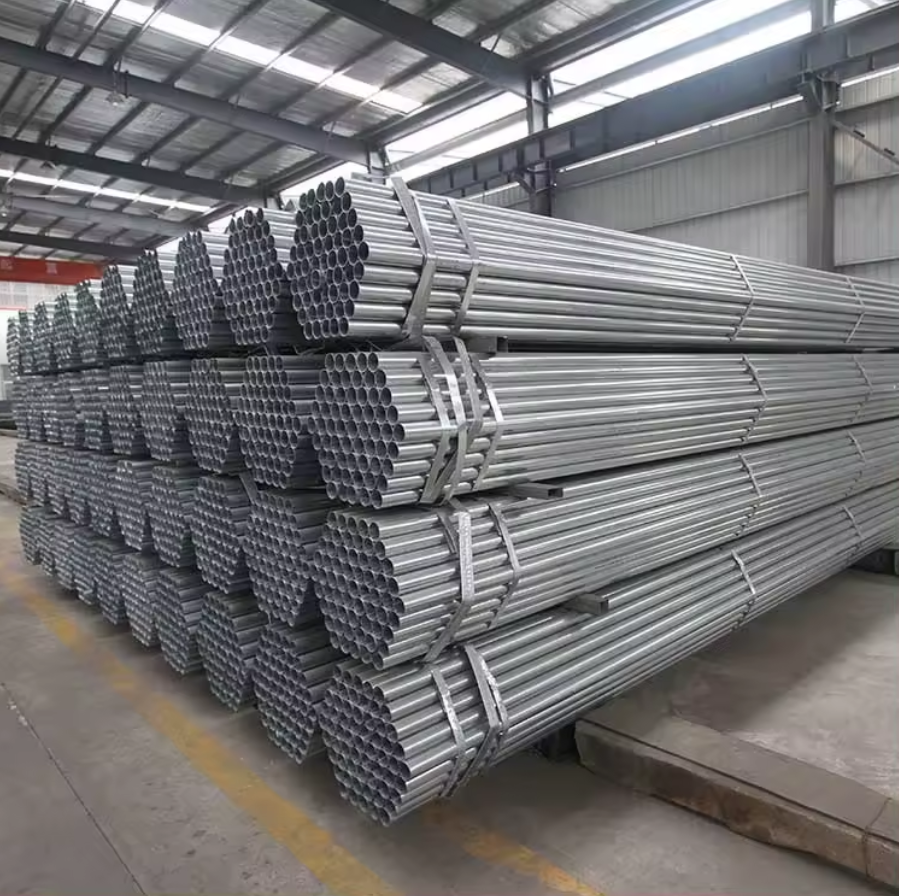
Mechanical demands dictate the choice between different enclosed profiles. A round steel tube offers superior torsional resistance. It resists twisting forces better than angular shapes. When projects involve fluid dynamics or exposed environments, round profiles minimize wind resistance significantly. They allow air to flow smoothly around the structure. In contrast, a Square Tube catches wind easily. However, square profiles provide flat surfaces. These flat surfaces make bolting and framing connections much easier during fabrication.
Structural shapes divide roughly into enclosed tubes and open profiles. Enclosed tubes generally offer higher strength-to-weight ratios than open counterparts. They provide structural rigidity across multiple axes. Open profiles serve different functional requirements entirely. A Steel Channel or a Steel Angle is typically selected for cross-bracing. You will also see them used in lighter framing supports. Open profiles reduce overall material volume where multidirectional load-bearing is unnecessary. Round tubes continue to handle the primary column loads effectively.
Engineers rarely rely on a single profile type. Building a complex Steel Structure requires combining multiple shapes strategically. Engineers optimize material costs by matching each profile to its specific load requirement. They combine round columns for primary support. They attach angles for lateral bracing. They utilize channels for floor joists. This integration maximizes structural integrity while maintaining connection feasibility.
Profile Comparison Table | |||
Profile Type | Primary Advantage | Best Use Case | Connection Difficulty |
|---|---|---|---|
Round Tube | Torsional strength, wind resistance | Exposed columns, scaffolding | High (requires coping/saddling) |
Square Tube | Flat surfaces, multi-axis strength | Framing, hidden columns | Low (simple flat welds/bolts) |
Angle / Channel | Lightweight, easy access | Bracing, joists, supports | Very Low |
Fabricating coated metals requires strict health and safety protocols. Welding vaporizes the zinc coating instantly. Inhaling these vapors causes "zinc fume fever." Welders experience severe flu-like symptoms. You must enforce the use of proper respirators. Always provide aggressive local exhaust ventilation. Quality control during welding also demands preparation. You must grind away the zinc coating around the weld zone prior to striking an arc. Failing to remove the zinc leads to weld porosity. Trapped zinc gas creates weak, brittle joints.
Grinding and welding strip away the essential corrosion barrier. You must restore this protection immediately. Mandatory application of zinc-rich cold galvanizing compounds is required over all welded joints. You must also treat any cut ends similarly. Workers apply these compounds via spray or brush. Ensure the compound contains at least 92 percent metallic zinc in the dry film. This step restores the cathodic protection network seamlessly.
Improper storage ruins coated materials before installation begins. "White rust" or wet storage stain forms when tightly bundled tubes get wet. Lack of oxygen prevents the zinc from forming its protective carbonate patina. Instead, a powdery white zinc oxide develops rapidly. This degrades the coating thickness.
Best Practices for Storage:
Elevate all bundles off the ground using wooden blocks.
Store materials at a slight incline to promote water drainage.
Ensure adequate ventilation flows between individual pieces.
Store indoors whenever possible during heavy rain seasons.
Procurement must align material specifications precisely with engineering requirements. Standard pipe grades like ASTM A53 serve fluid transport applications primarily. Structural frameworks require specific structural grades like ASTM A500. Verifying structural grades ensures the material possesses the required yield and tensile strengths. Never substitute standard plumbing pipe for critical load-bearing applications without engineering approval.
Construction schedules collapse when delivered materials fail to fit. Specifying exact dimensional tolerances prevents catastrophic site delays. You must define strict limits for Outside Diameter (OD). Clearly state the required wall thickness. Provide exact length requirements. Slight deviations in wall thickness alter the structural load capacity dramatically.
Choosing the right vendor mitigates procurement risks substantially. Evaluate potential suppliers using strict criteria.
Traceable Mill Test Reports (MTRs): Vendors must provide verifiable MTRs. These documents confirm the chemical composition and mechanical properties of the steel heat lot.
Galvanizing Transparency: Vendors must state compliance with recognized galvanizing standards. Ensure they reference ASTM A123 to guarantee minimum zinc coating thickness.
Logistical Capabilities: Assess lead times strictly. Verify the vendor possesses the logistical infrastructure to handle high-volume or oversized deliveries safely.
A zinc-coated round profile remains a foundational material for heavy construction projects. It guarantees long-term structural integrity while requiring minimal maintenance over decades. Securing project success depends entirely on making informed material choices early in the design phase.
Final selection must constantly balance specific environmental exposures against mechanical demands. The environment dictates the required zinc thickness. The load requirements dictate the wall thickness and diameter. Overlooking either variable compromises project safety.
To move forward effectively, consult directly with your structural engineer. Finalize your specific load and environmental requirements first. Then, request detailed MTRs from your shortlisted steel suppliers to secure exact, compliant project quoting.
A: Yes, but the zinc coating must be removed at the weld site to ensure a strong joint, and the area must be re-galvanized post-welding. Proper safety ventilation is required.
A: Tubes are generally measured by exact Outside Diameter (OD) and wall thickness and are used for structural applications. Pipes are measured by Nominal Pipe Size (NPS) and are typically used for fluid transport.
A: Depending on the environment and zinc thickness, hot-dip galvanized steel can last 50 to over 100 years before requiring significant maintenance.
A: Round tubes are preferable when the structure faces high wind loads, requires torsional strength, or involves fluid dynamics, whereas square tubes are often chosen for easier framing and flat connections.