- All
- Product Name
- Product Keyword
- Product Model
- Product Summary
- Product Description
- Multi Field Search
Views: 0 Author: Site Editor Publish Time: 2025-10-21 Origin: Site


Choosing the right stainless steel bar is essential for any project. But how do you decide between a flat bar and a square bar? Each shape has its unique advantages, but the right choice depends on your needs. In this article, we’ll explore the key differences between flat and square bars and guide you through their best uses.
Flat Bar: Flat bars are characterized by their rectangular shape with consistent width and thickness. They are typically longer and thinner than other bar types, making them ideal for applications that require a large surface area. They are often used for structural support, such as beams or base plates, and provide ample space for welding and bolting.
Square Bar: A square bar, as the name suggests, has equal dimensions for its width, height, and thickness, giving it a symmetrical square cross-section. It’s commonly used in applications where strength is needed in all directions, such as in mechanical components or reinforcing structural elements.
Comparison: While flat bars offer a broad, flat surface for welding or machining, square bars provide equal strength in every direction, making them ideal for mechanical applications that involve dynamic loads.
Flat Bar:
Structural Supports: Used in beams, frames, and base plates where broad surface area is essential.
Brackets & Gussets: Flat bars provide excellent weld points, making them the go-to choice for creating brackets and gussets.
Architectural Frames: Common in door frames, window frames, and railings, especially when larger surface areas are needed.
Square Bar:
Fasteners: Square bars are often used in precision machining for fasteners, nuts, bolts, and spacers.
Reinforcement: Commonly used in situations where load distribution in all directions is required.
Structural Elements: Ideal for construction projects where the load-bearing requirements are evenly distributed, such as in supports and frames.
Flat Bar: Flat bars are excellent for static load-bearing applications, as the broad surface area helps distribute the force evenly across the material. They are commonly used for applications that require significant strength in a single direction.
Square Bar: Square bars are typically used in dynamic load-bearing applications. Their symmetrical profile gives them an advantage when the material needs to handle forces in multiple directions simultaneously. This makes them perfect for machinery and mechanical components, where rotational or torsional forces are common.
Comparison: Flat bars excel in static load situations, while square bars are more versatile in applications where multidirectional strength is critical.
Flat Bar: Flat bars are well-suited for environments that involve static stress and welding. They are particularly beneficial in industries like construction and infrastructure, where large structures need dependable reinforcement.
Square Bar: Due to the evenly distributed strength across all sides, square bars are particularly useful in high-performance applications. This includes fields like automotive or aerospace, where the material is subject to varying forces and requires durability and toughness.
Comparison: Flat bars offer high resistance in static environments, while square bars offer greater flexibility and strength in more dynamic applications.
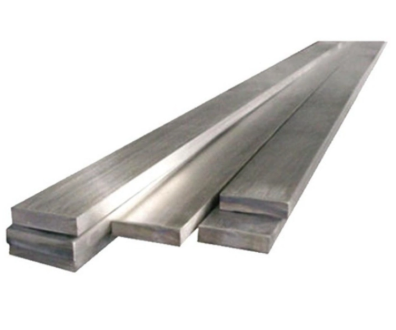
Applications: Flat bars are often the go-to choice in construction and engineering when a wide, flat surface is necessary for load distribution. They provide strong weld points and are easy to cut and modify, making them versatile for custom structures.
Advantages:
Large surface area helps distribute static loads evenly.
Easy to weld, making them ideal for custom fabrication.
Versatile in construction and mining industries.
Weldability: Flat bars are easier to weld and work with compared to square bars, particularly in custom metal fabrication projects. If you need to create custom brackets, base plates, or frames, flat bars are the ideal material.
Versatility: Flat bars are widely used for custom fabrication, allowing flexibility for projects requiring specific shapes and measurements. They can be used across a wide range of industries from transportation to infrastructure.
Tip: If you're working on a project that requires static load-bearing or custom metalwork, flat bars are your best option.
Budget Considerations: Flat bars tend to be more cost-effective than other bar shapes. Their wide availability and easy processing make them a practical choice when working with tight budgets.
Advantages:
Cost-effective for large projects.
Readily available in different sizes and finishes.
Easily customizable for specific needs.
Ideal Applications: Square bars are widely used in structural reinforcement where strength is required in multiple directions. This makes them ideal for load-bearing applications where a high degree of flexibility and resistance to forces in all directions is needed.
Benefits:
Reliable strength in all directions.
Excellent for reinforcing structures and mechanical assemblies.
Choose square bars if you need strength in every direction or if your project involves rotational or torsional forces.
Strength in Precision: Square bars provide the structural integrity needed for components that must withstand dynamic forces. They are often used in precision-machined fasteners, nuts, and bolts, where uniformity and strength are critical.
Applications:
Machining of fasteners, spacers, and pins.
Construction fittings and marine hardware.
Structural Integrity: Square bars are essential in heavy-duty applications that involve load-bearing and mechanical reinforcement. Their shape makes them ideal for use in structures where multi-directional strength is necessary.
Benefits:
Strong resistance to forces in multiple directions.
Versatile for high-performance applications in construction and machinery.
When strength in multiple directions is critical, square bars are the ideal choice, particularly for load-bearing applications.
Cutting and Bending: Flat bars are easy to cut, bend, and shape, making them perfect for custom fabrication projects. Their versatility allows them to be adapted to a wide variety of uses.
Welding Considerations: Flat bars are much easier to weld, especially when large, flat surfaces are required for a clean joint. For projects involving welding or custom cutting, flat bars provide greater flexibility and ease of use.
Machining: Square bars are more challenging to machine due to their angular shape. This requires specialized tools and techniques, especially when precision is needed.
Customization: While square bars offer excellent strength, they require more effort to modify or shape compared to flat bars. However, they are indispensable when uniform strength and durability are required.
Square bars are best used for projects where uniform strength is required, even though they may be more challenging to work with compared to flat bars.
Flat bars perform exceptionally well in static load-bearing applications, where the force is distributed evenly across the material. They are commonly used in structural beams and base plates, where the strength of the material is crucial to support heavy weights.
Square bars excel when dealing with dynamic loads, particularly when the material is exposed to rotational or torsional stress. Their symmetrical design allows for strength in all directions, making them ideal for machining components.
Tip: For static load-bearing applications, flat bars are your best choice. For projects involving rotational or dynamic loads, square bars provide superior performance.
In conclusion, both flat bars and square bars offer distinct advantages depending on your project’s needs. If your application requires a wide surface area, weldability, and cost-effective solutions, then flat bars are the optimal choice. On the other hand, if you need multi-directional strength, high-performance load-bearing, and precision machining, square bars will provide the reliability and durability you need. Shanghai Changzeng Metal Co., Ltd offers both flat and square bars, providing high-quality products that meet the demands of various industries.
| Feature | Flat Bar | Square Bar |
|---|---|---|
| Shape | Rectangular | Square (equal dimensions) |
| Primary Use | Structural, Custom Fabrication | Load-bearing, Mechanical Components |
| Strength Direction | Primarily one direction | Strength in all directions |
| Cost and Availability | More cost-effective | More expensive, less common |
| Ease of Fabrication | Easier to cut and weld | Harder to machine, precise machining required |
A: A flat bar is a rectangular piece of metal with consistent width and thickness, commonly used in construction, fabrication, and structural applications.
A: The key difference lies in their shape. A flat bar is rectangular, while a square bar has equal width and height, providing strength in all directions.
A: Choose a flat bar when you need a large surface area for welding or when cost-efficiency and easy customization are important.